Where a Person Should Approve AI Invoice Processing
AI should check the invoices, but people must sign off on risk.
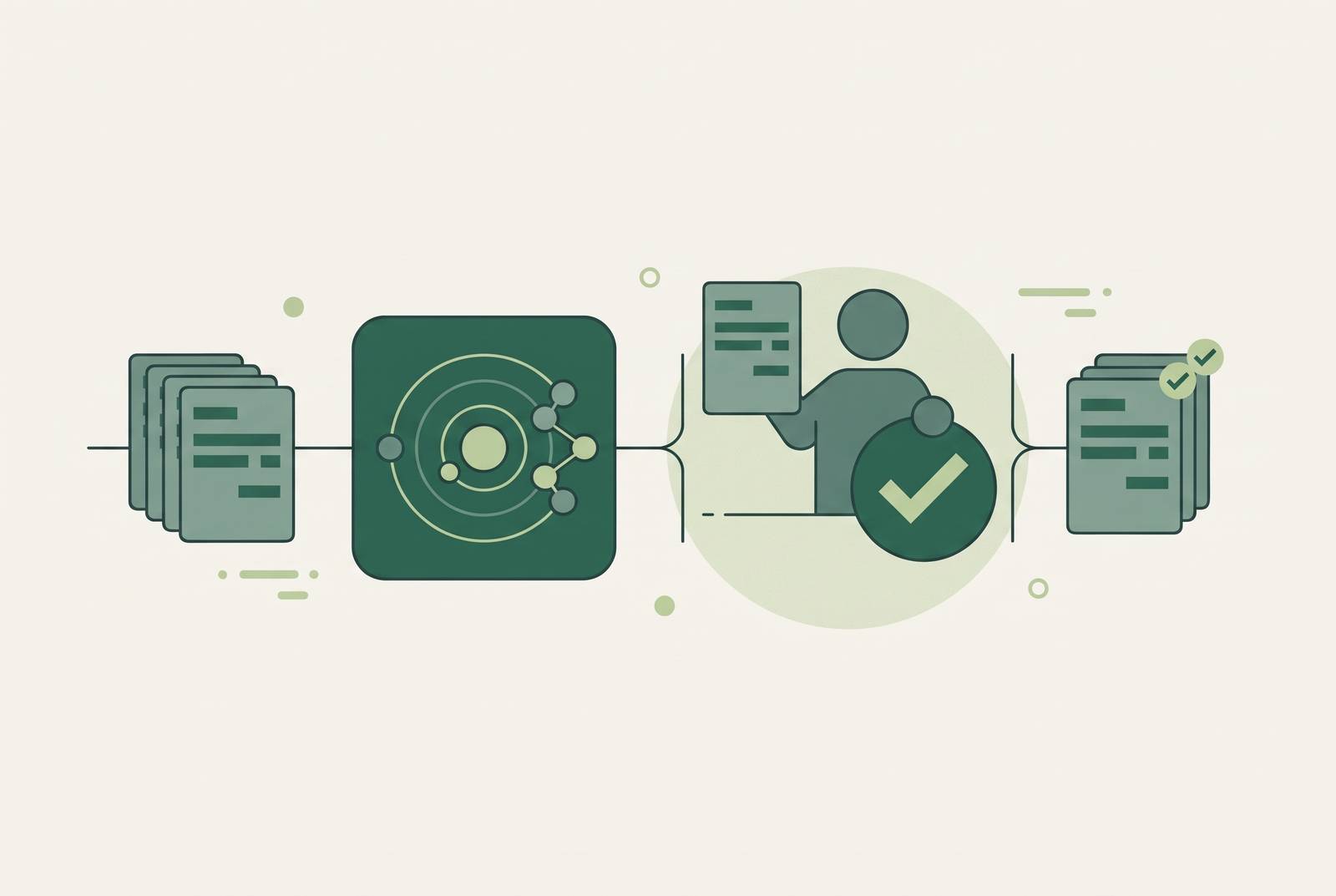
AI workflows for finance are best used to extract invoice data, match purchase records, and route exceptions. In accounts payable, amount thresholds, PO mismatches, unrecognized vendors, duplicate flags, and payment release need explicit human approval. The boundary is simple. AI handles the repetitive checks, while people authorize the decisions that put money at risk.
Why AI alone cannot safely close an invoice
AI can read and classify invoices reliably, but a payment error is money out the door. Correcting a field is not the same as recovering a payment. Invoice processing includes decisions with financial, legal, and fraud exposure, so accuracy alone is not enough. Someone must remain accountable for accepting an exception and authorizing the result.
That accountability starts with the workflow design. Finance teams define approval thresholds, exception routes, and SOX checkpoints, and the AI enforces those settings. A system that processes invoices quickly without those boundaries has automated the work, but it has not established who has the authority to approve it.
How confidence thresholds separate automatic processing from human review
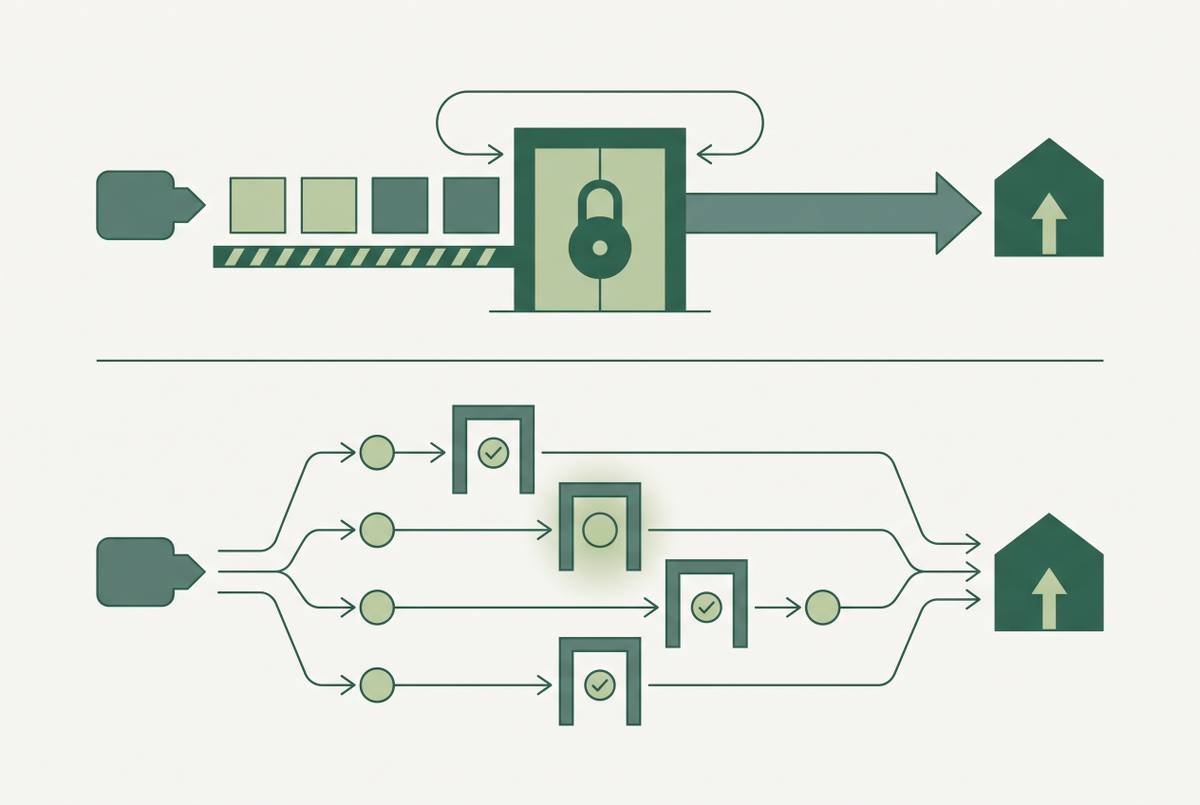
Confidence thresholds set how sure the system must be to keep processing without asking for help. When confidence is high and the data meets predefined rules, an invoice proceeds. Low confidence or an exception stops it. Confidence does not override policy, so even a perfectly readable invoice must pause if it crosses a mandatory approval threshold.
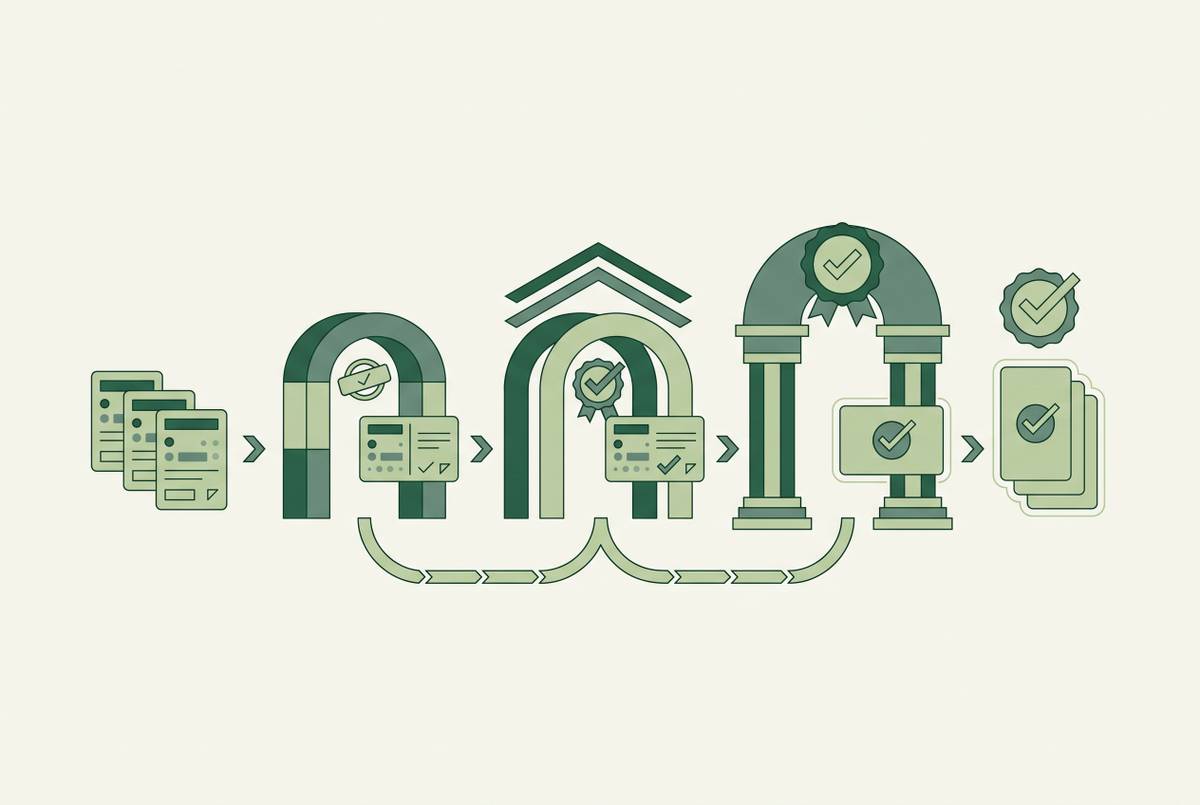
The routing model has three risk tiers. Low-risk, low-value invoices that match their purchase order within tolerance can get automatic approval without a manager having to click through them. Medium-risk invoices, including minor variances or new suppliers, go to a single approver with context and resolution options. High-risk exceptions, including large amounts, vendor anomalies, duplicate flags, and payment release, enter a defined approval chain.
More advanced systems divide the work among agents that classify and code, validate against purchase orders, and route to approvers. Those roles belong inside the approval process, using live ERP data. The following triggers are the points where that routing must force a stop.
Amount thresholds as the first mandatory stop
A person must approve a high-value invoice even when every field matches. The amount alone creates the need for review. An error on a large invoice creates greater financial and audit exposure, and a clean match does not remove that exposure. Matching establishes consistency between records.
Finance sets the threshold as a policy decision, and the system enforces it. It also determines where human attention goes. An enterprise handling many small invoices can automate the bulk of routine processing while reserving review for the smaller group that represents a disproportionate share of spending. The purpose is not to make every invoice wait, but to place a human gate where the potential loss justifies one.
PO mismatches and three-way match failures that cannot self-resolve
Unlike an amount threshold, a purchase order mismatch can stop an invoice of any size. Three-way matching compares the invoice, the PO, and the goods receipt. A person needs to review a gap that is beyond the defined tolerance. It could reflect a pricing error, a delivery shortfall, an unauthorized change, or fraud, and the records alone may not explain which.
Consider a contractor whose supplier invoice does not match what was delivered. The useful AI output is a brief explanation for the owner to review before approval. The discrepancy is only the starting point. To resolve it, someone must check what actually arrived and whether the billed amount is authorized.
The reviewer therefore needs to see what matched, what did not, and by how much to make a decision using the completed matching work. Automatically accepting either the invoice amount or the PO amount does something different. It makes a policy choice without human approval and removes the accountability the mismatch check was supposed to create.
Unrecognized and newly onboarded vendors as a categorical pause
A mismatch means the records disagree, while an unfamiliar vendor raises a more basic question about who is asking to be paid. New suppliers must pause until an authorized person verifies identity, tax details, purchase authority, and payment instructions. Clean invoice data is not proof of legitimacy. Neither is an amount that fits comfortably below the approval threshold.
The vendor master provides the approved reference. The system should compare the supplier’s name and details against that record and stop when they do not match. The finance team remains in charge of vendor-master changes. An invoice cannot become its own evidence that a new supplier or a changed supplier record is valid.
Changed banking details deserve the same hard stop. A new account number on an invoice or in a change-request email must be verified through a known, independent contact. AI-generated fake invoices and vendor impersonation make that separation more important. A convincing document can imitate familiar details and patterns. The decisive control is a person confirming the change through an established relationship channel, rather than treating resemblance to past transactions as authorization.
Duplicate flags that require confirmation before dismissal
A duplicate flag means the AI found a likely match. The same vendor may have billed twice by mistake, sent a correction, or billed a valid recurring charge. A potential duplicate must therefore wait for a person to decide what to do with it, rather than be dropped without a word or approved automatically.
The system can compare vendor names, amounts, invoice numbers, and what is in the documents. Its output should be a flag with a written reason, giving the reviewer enough context to check the underlying transaction. Detection is not a decision about intent. Silently disposing of the invoice leaves no explanation for nonpayment, while dismissing the warning without review leaves the payment risk unresolved. A person must confirm which case applies and record the outcome.
Payment release as the hardest line in the workflow
Payment release is different from every earlier approval because it is the point at which money moves. Extraction and validation can be automated, and low-risk invoice approval can follow agreed rules. But those permissions do not automatically authorize payment. Beyond agreed thresholds, the decision to release funds must stay with a person.
A clean invoice is evidence. It may have passed the amount check, matched its PO and receipt, and passed vendor verification and duplicate screening. The system should require a named person’s explicit confirmation before issuing a payment instruction and log that confirmation with the reviewer’s identity and a timestamp.
For SOX-relevant processes, human approval at payment release is a compliance control. No PCAOB standard, SEC rule, or COSO guidance authorizes a probabilistic model to serve as the sole payment approver. Final approval, release, and vendor-master changes must still follow policy and have a person’s sign-off.
Requesters should not approve their own invoices, and no single person should control the process from receipt through payment release. This is more than a second accuracy check. Requiring separate people raises the bar for fraud because collusion is harder than one person acting alone.
What the audit trail must capture at every approval point
An approval without verifiable evidence is not an auditable control. The record must establish that the review happened and let an auditor reconstruct the decision. A final status alone is not enough. The trail needs to connect the information presented, the AI’s output, and the person’s approval.
The 2026 COSO guidance on AI and internal controls specifies a complete trail covering prompts, inputs, outputs, model and configuration versions, and evidence of human review. Those details show what the AI acted on and whether the control worked as designed. Retention also needs a clear distinction. SOX sets no fixed statutory minimum for how long companies must keep their own system logs, which should be kept long enough for audit testing, while the seven-year workpaper requirement covers the records of external audit firms.
The EU AI Act’s December 2027 provisions for high-risk systems include Article 12 logging requirements and human oversight obligations for organizations in scope. The SEC’s March 2026 announcement of a group dedicated to SOX enforcement takes aim at auditor misconduct and breaches of SOX auditing standards. The announcement reinforces the need for defensible evidence. Records must be made as part of normal processing so that the approval history does not have to be rebuilt when an audit begins.
How enterprise AI tools that span multiple systems change where approval decisions live
An invoice decision can be incomplete even when the accounts payable record looks correct. Procurement may have the contract terms, operations may have the delivery record, and finance may have the history of past payments. The gaps between those views create risk. Cross-system tools can bring that evidence to the approver when a decision is needed, so approval does not depend on the partial account in one system.
A tool that reads across HR, finance, sales, and operations must have defined limits on what it can read, what it can change, and who authorizes each action. Read access is not write access. A vendor-master update, payment instruction, or GL coding change across connected systems should require a named person to give explicit approval, which is logged against that action.
For teams evaluating enterprise AP or agentic workflow tools, the criteria follow from that distinction. The tool should show the cross-system evidence that matters, keep reading separate from acting, require the approvals that are due, and keep a record of the decision with each approval. Connectivity alone does not establish adequate control. Finance needs to show the board and auditor what happened, who approved it, and what the outcome was.
A practical map of when to approve, when to escalate, and when to reject
Low-risk invoices that meet the automatic-processing rules can move ahead without a person reviewing them at that stage. Where policy requires approval, the approver reviews the AI’s context summary and confirms that the conclusion is sound. The approval is then logged before the invoice moves.
Escalation applies when the invoice needs resolution. PO mismatches, minor threshold breaches, and first invoices from a new vendor should reach the person with the context or authority to decide. That is not always the next manager. The escalation needs the specific discrepancy and supporting evidence so the recipient can act.
A hold applies when verification must happen first. New banking details, unrecognized vendor names, and duplicate flags do not proceed until a person resolves the concern, using an independent channel where verification requires one. Confirmed duplicates, fabricated or unverifiable fields, and amounts without a corresponding PO or authorization should instead be rejected with a recorded reason, allowing a vendor response and preserving the audit trail.
Clearing an exception does not erase the release gate or the separation of duties behind it. The policy also needs periodic human review. Invoice volumes, vendor relationships, and risk profiles change, so thresholds and routing rules must be revisited rather than treated as permanent settings chosen at implementation.