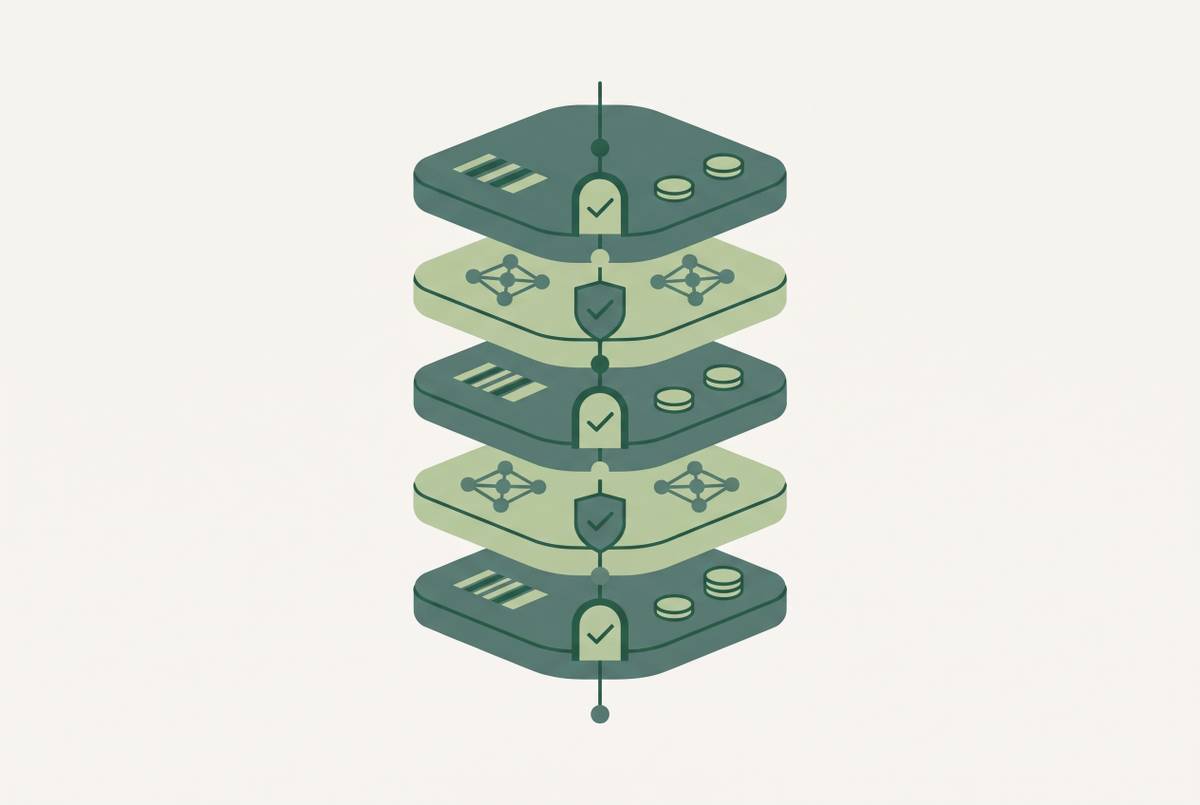
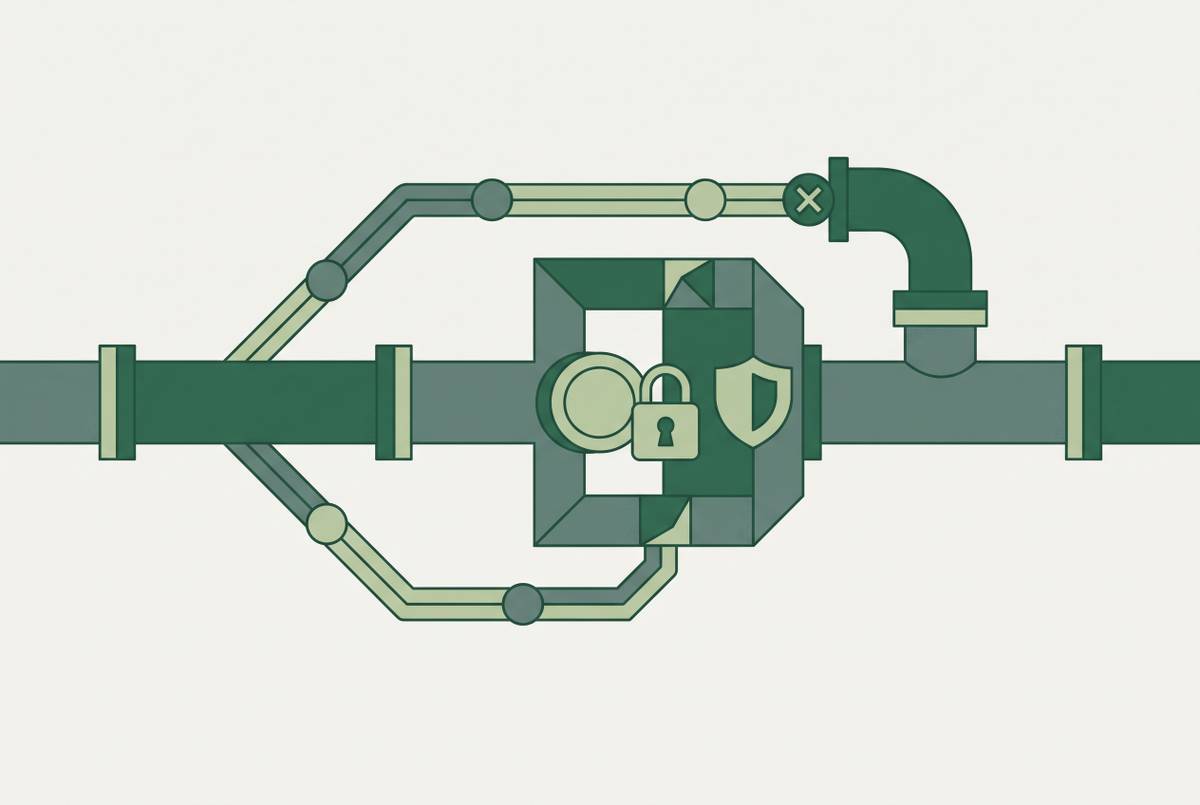
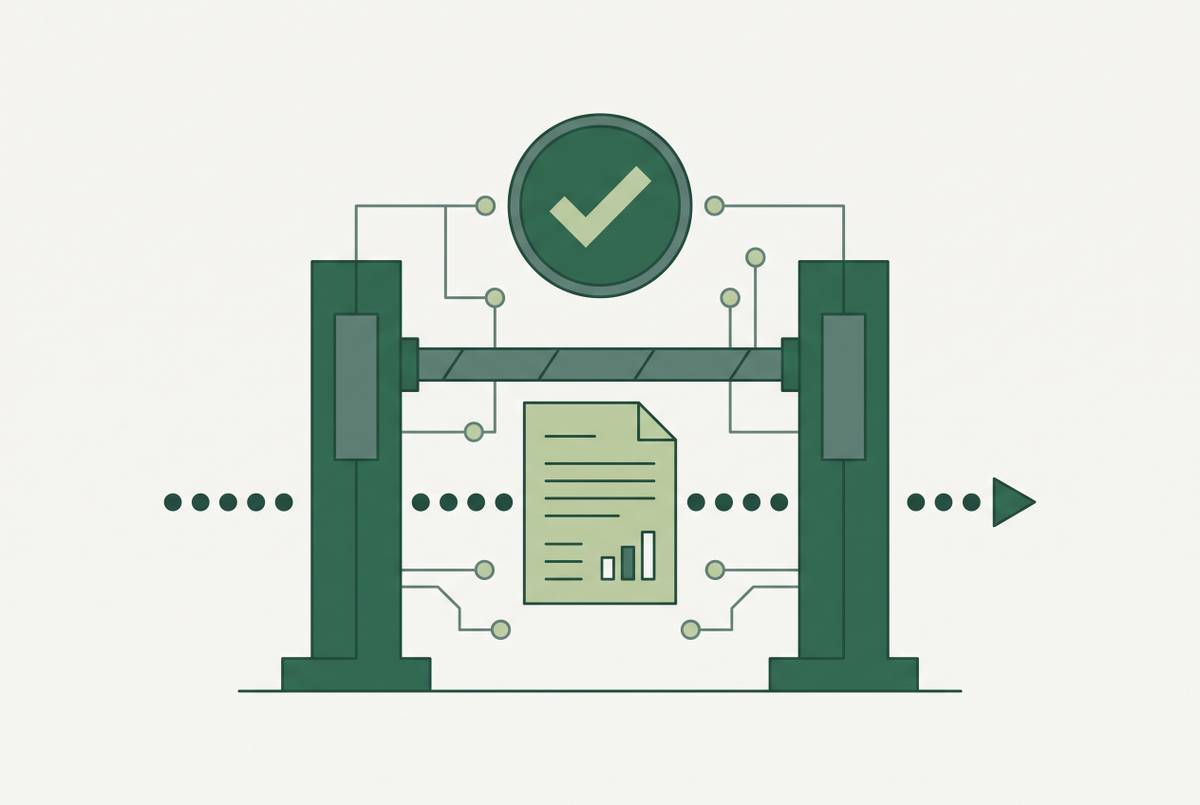
How to Set Up Approval Gates for AI Vendor Evaluations
Approval gates keep a vendor from advancing on a read-through alone.
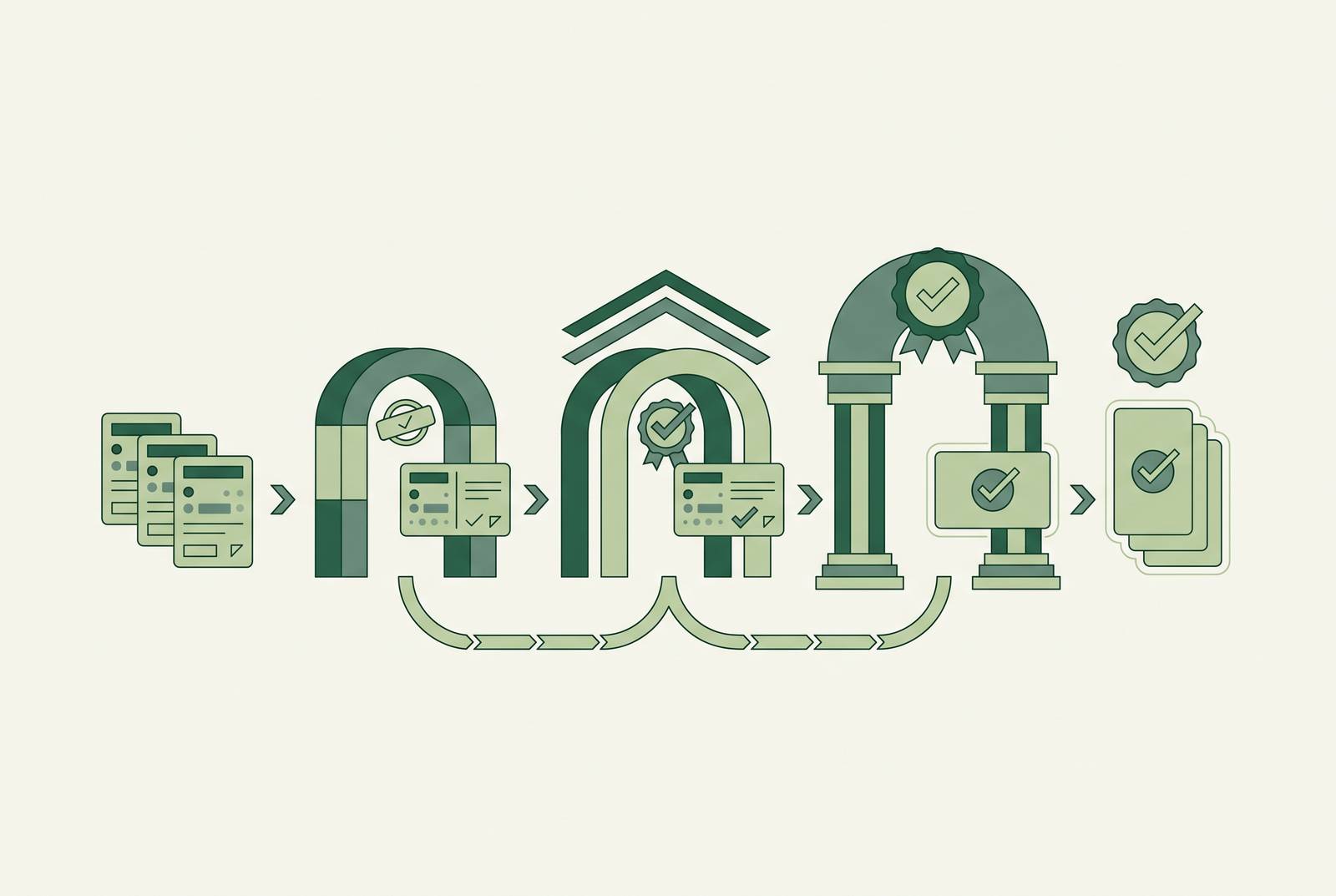
Without a clear approval gate, a vendor can move forward just because someone read a report and didn't object. These steps show how to fix that.
AI-generated vendor evaluations are different from the procurement memos most teams are used to reading. The output is not certain. The model's behavior changes depending on what data it receives. The report also carries hidden assumptions. These include what data the model trained on, what it pulled in to make its case, and what it left out. If conditions changed and nobody checked, the evaluation could be wrong.
There is a useful rule in regulated enterprises: a demo shows what works. Due diligence finds what breaks. Those are different exercises with different standards of proof. An AI-generated evaluation, left unchecked, tends to read like a demo. That's true even when it looks like due diligence.
Without a defined gate, a reader's agreement gets mistaken for permission to act. Someone reads the summary and thinks "sounds right." The vendor moves forward because nobody drew a line showing where reading stops and authorizing starts. That is the structural failure this piece addresses. It is fixable with the right gate design.
What a gate is
A gate is not a waiting room where documents sit until someone gets to them. A gate is a decision point. It is a specific moment where specific evidence must be in place before anyone moves forward.
A gate has an exit condition. A delay does not. A delay happens when nobody defined that condition. The document just sits there until someone feels enough pressure to push it through.
Enterprise AI governance — the policies and controls large organizations use to manage AI responsibly — builds approval gates directly into the process. Gates belong inside the process, not bolted onto its end.
For AI-generated evaluations, a gate must separate two acts that get collapsed into one too often. The first is reading and assessing a recommendation. The second is authorizing action based on it. Authorizing means committing budget, data access, or deployment rights. These two acts need different evidence. They often need different people. The gate is the exact handoff moment where one stage's output becomes the next stage's input. Someone has to sign off on that handoff.
The evidence each gate must have before anyone decides
A gate with no evidence requirement is just a ritual. People show up, something gets stamped, and nothing about the decision actually improves. The evidence requirement is what gives the gate real force.
For AI-generated vendor evaluations, that evidence breaks into four layers. Each layer answers a question the reviewer must be able to answer on the spot.
Business justification comes first. Standard vendor approval practice treats this as the minimum before any evaluation resources get spent.
Data and security posture comes next. It carries the sharpest teeth of the four. This means written confirmation that customer inputs won't be used to train the vendor's model. Standard practice calls that no-training commitment non-negotiable. Without it, one customer's data can end up shaping outputs served to every other customer on that vendor's platform.
Auditability is the third layer. An audit trail is a record of every significant action and decision in a process. Enterprise AI governance frameworks treat audit trails as a required part of the structure. You can't add them later if time allows.
The fourth layer turns the lens back on the evaluation document itself. Which model wrote it? Did a human check its work, and under what conditions? These are assumptions baked directly into the recommendation. A reviewer who doesn't know them is trusting a document without knowing what it is built on.
A 30-point enterprise scorecard organizes evaluations across categories like business outcome fit, data security, and governance and risk controls. Each is weighted and scored. The gate evidence requirement lines up with which of those categories are actually filled in before a decision gets made. A gate that skips those categories is approving a vendor on gut feeling.
Who owns each gate
A gate with no named owner leads to a strange kind of non-accountability. Everyone reviewed something. No one actually decided anything. That is how a vendor ends up deployed without a single person who can explain why it was approved.
Authority has to attach to the gate itself. It can't drift in from someone's job title. Every AI system needs one accountable owner. That owner tracks the system's performance, validation status, lifecycle changes, and incident response. They must be linked to the approval process. Their sign-off is required before deployment or before any major change to the model.
The sharpest practical distinction in the entire gate structure is this: read access versus write authority. Read access means permission to see the AI-generated evaluation and the evidence behind it. Write authority means permission to actually authorize the next move. That could be shortlisting a vendor, starting a pilot, or approving full deployment. These need to sit with different people. At minimum, they require a separate, deliberate act even when the same person holds both. Picture a senior reviewer who marks an evaluation "reviewed," meaning only that she read it and didn't object. A downstream team sees that mark and treats it as approval to move the vendor into a pilot. Nobody lied. Nobody skipped a step on paper. But the deployment happened on the strength of a read, not a write, because the two were never kept separate.
AI agents — automated systems that can take actions on their own — stretch this boundary further. A purchasing agent might be allowed to request quotes and generate a purchase order up to a set dollar threshold, but not approve that order or release payment. The gate reviewer's job includes checking that permissions stay the same or shrink as authority passes from one part of the system to the next. They should never expand along the way. A permission that grows as it moves downstream means the authority boundary was never actually drawn.
How the gate sequence works as a handoff
Gates don't work in isolation. They work in sequence. Each gate takes what the previous one established and hands forward a specific, bounded authorization.
Applying that to an AI vendor evaluation produces four gates. The handoff out of Gate 1 is a decision to spend evaluation resources. Nothing more. It is not a decision about the vendor itself.
Gate 2 is the detailed evaluation. Structured approval practice recommends time-boxing this stage — two to four weeks depending on how complex the tool is — so governance doesn't become a bottleneck. The handoff out of Gate 2 is a completed, scored evaluation package.
Gate 3 is the decision itself. A conditional approval must spell out what remediation is required and by when. That keeps the boundary on conditional authority explicit.
Gate 4 is onboarding. The handoff here is a live system with documented controls attached to it.
Enterprise AI evaluation practice frames readiness this same way: phased rollout with governance checkpoints built into every stage, not one single go-live moment. Each checkpoint must pass before the next phase can start. For AI-generated evaluations, one more gate must sit in front of all four. Before the evaluation document reaches Gate 2, someone has to confirm its provenance — meaning the model that wrote it, the data it drew on, and the conditions under which a human checked it. Skipping that leaves the whole sequence built on an unverified document.
Sequences commonly break when, under time pressure, Gate 1 and Gate 2 get compressed into one pass. By the time the package reaches Gate 3, the committee doesn't have the evidence it needs. It ends up approving based on how polished the presentation looks, not on what the evidence shows. The sequence didn't fail because anyone cut corners on purpose. It failed because collapsing two gates into one erased the handoff that Gate 3 depended on.
What each gate record needs to capture
A gate that produces no record did not govern anything. It doesn't matter how many meetings happened around it. If a procurement decision gets challenged, if an incident gets investigated, or if a regulator asks for proof, a gate with no trace offers no protection.
A proper gate record captures more than a yes or no. It shows who started the activity. It shows what evidence got reviewed. It shows which assumptions the reviewer accepted without further proof. It shows who authorized the move to the next stage. And it shows exactly where the authority boundary sat. Enterprise governance practice treats the audit trail as its own distinct part of the structure. It covers the AI system's full lifecycle, not just the moment of approval.
For AI-generated evaluations, the decision record needs one more distinction built in. It must separate what the AI's recommendation actually said from the human judgment layered on top of it. What did the evaluation surface? What did the reviewer accept outright? What did the reviewer push back on? Why did the final decision land where it did? That trace connects the evidence to the authorization. Without it, you can't reconstruct a decision later. You can only guess at it.
Fair question to turn back on the buyer's own process: a company that demands that standard from a vendor owes its own gate records the same discipline.
The payoff isn't just regulatory. A vendor evaluation with no captured reasoning means that if the vendor relationship stalls or the tool underperforms six months later, the next evaluation starts from zero. Nobody remembers why the first approval went through, what was questioned, or what evidence carried the decision. The team ends up re-running the entire evaluation from scratch. A gate record is what prevents that waste.
How to tell a gate that moves things forward from one that only delays them
Not every gate in a vendor evaluation process is doing real governance work. Some are performing politics. Some are doing nothing measurable at all. That cost adds up fast across a procurement cycle.
A gate that actually advances a decision has three properties worth checking. It has a defined exit condition: a specific, named set of evidence that, once present, permits the next step. It has a named owner who can say yes or no within a clear scope of authority. And it produces a record of what got decided and why, not just a note that a meeting happened.
A gate that only delays shows the opposite pattern on all three counts. The exit condition is vague or left to gut feel. The person with authority is unclear, or there isn't one. The record, if it exists, only shows that the gate got passed — not what reasoning sat behind it.
Vendor evaluations repeatedly produce three failure patterns. The first is the review-without-authority gate: a senior person reads the evaluation, raises no objection, and everyone downstream treats that silence as approval, even though no one ever held write permission. The second is the evidence-gap gate: the process reaches a decision point before the required evidence has been assembled, so the committee judges presentation quality instead of substance. The third is the reopening gate: a gate that already passed gets reopened by a stakeholder who was never its named owner, restarting the clock without adding any new evidence. That is governance by seniority, not governance by design.
The cost of responding to an issue rises sharply the later it is caught. Issues appearing in production carry the highest cost. That is the organizational price of a broken gate. A problem a working gate would have caught in week two of evaluation instead appears in production. It costs far more to fix at that point.
The practical test is simple: if removing a gate wouldn't change the odds of a bad vendor getting approved, that gate isn't doing governance work. Redesign it or cut it. A gate that only performs oversight without providing it burns time and gives everyone a false sense of security. Nodes, an AI product for accounts payable, accounts receivable, month-end close and spend that starts read-only and waits for a person's yes before changing anything, is one example of a gate built into the work itself. Done right, a gate sequence speeds up AI procurement rather than slowing it down. It cuts re-work, removes repeat evaluations, and clears the friction that builds up around decisions nobody can fully explain. The goal was always gates that actually govern.