How Procurement Approval Gates Work (And How to Sequence Them)
Learn how to sequence approval gates by risk, spend, and authority.
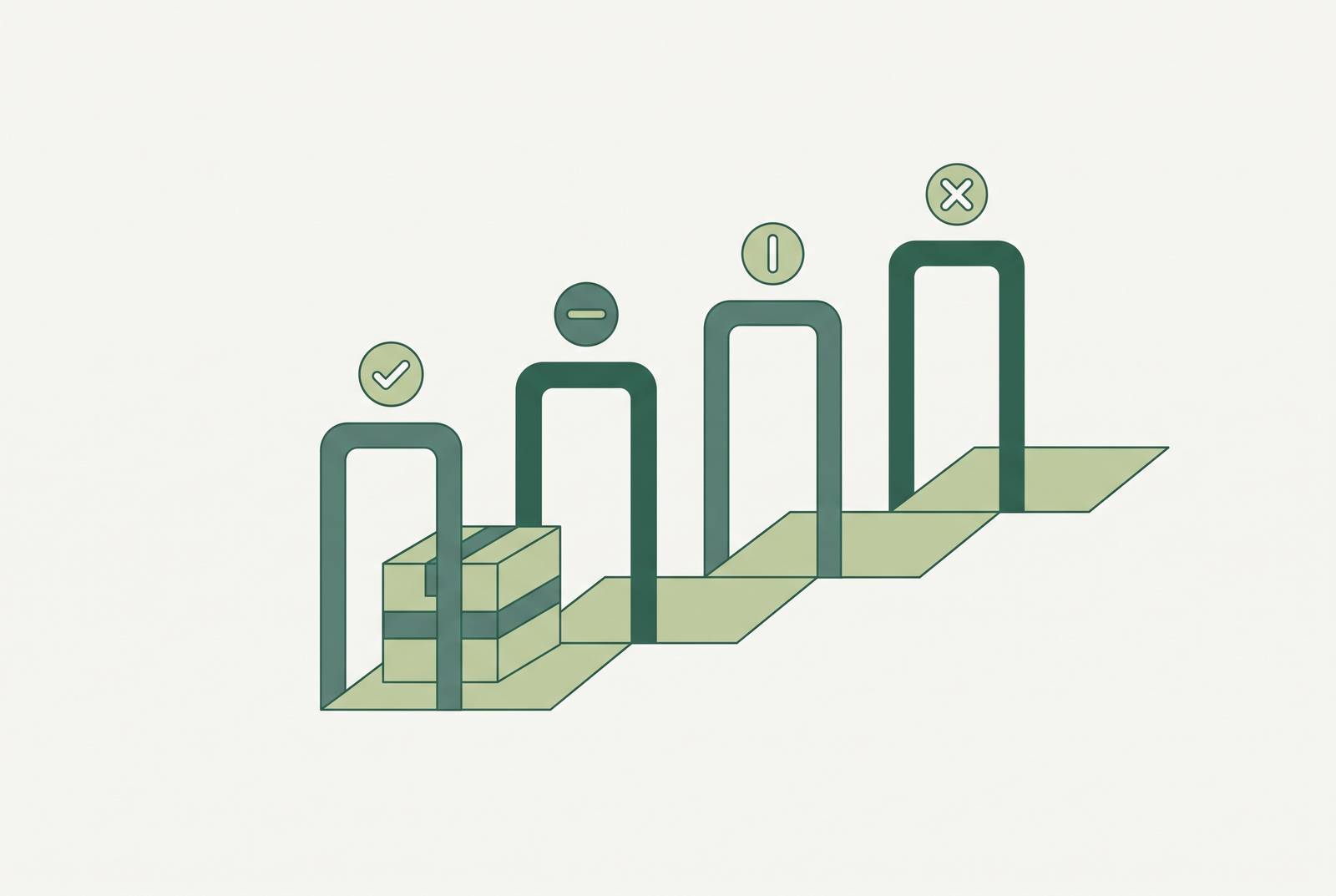
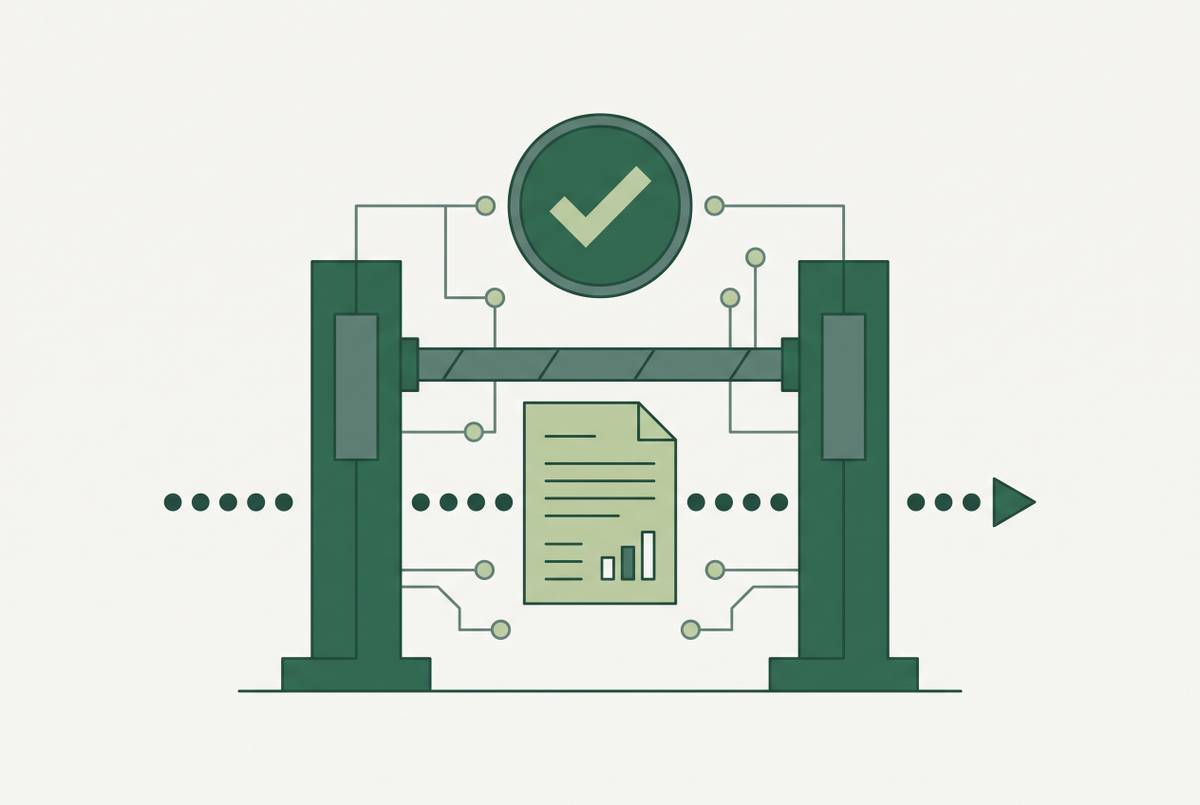
An approval gate is a checkpoint a purchase request must pass before you spend money. Each gate says who reviews the request. It also says what information they need and what counts as a yes, a no, or a reason to send it higher up.
Every gate needs three things. First, authority: the reviewer must have real power to approve or block spending at that level. Second, evidence: they need budget details, a business reason, vendor options, supplier history, and any risk flags already on file. Third, decision criteria: they need to know what counts as a yes, what stops the request, and when to pass it up. Where someone sits on an org chart and what they can actually decide are not always the same thing. Your sequence has to reflect where the real judgment happens. A step-by-step chain suits large purchases or sensitive categories because it creates a clear record, even if it takes longer. Reviewing things at the same time works when no single person has full authority — for example, when legal, finance, and IT all need to sign off on a new software contract. Most large organizations use both. They run step-by-step gates with some simultaneous reviews happening inside them. That structure is really a question of accountability: who owns the final call.
Speed is one measure of a good process. You also need to know whether the right person reviewed the right facts and whether exceptions were handled correctly. Measure approval time alongside decision quality, rework, and policy compliance.
How to choose between step-by-step and simultaneous review
Step-by-step and simultaneous reviews are two common building blocks.
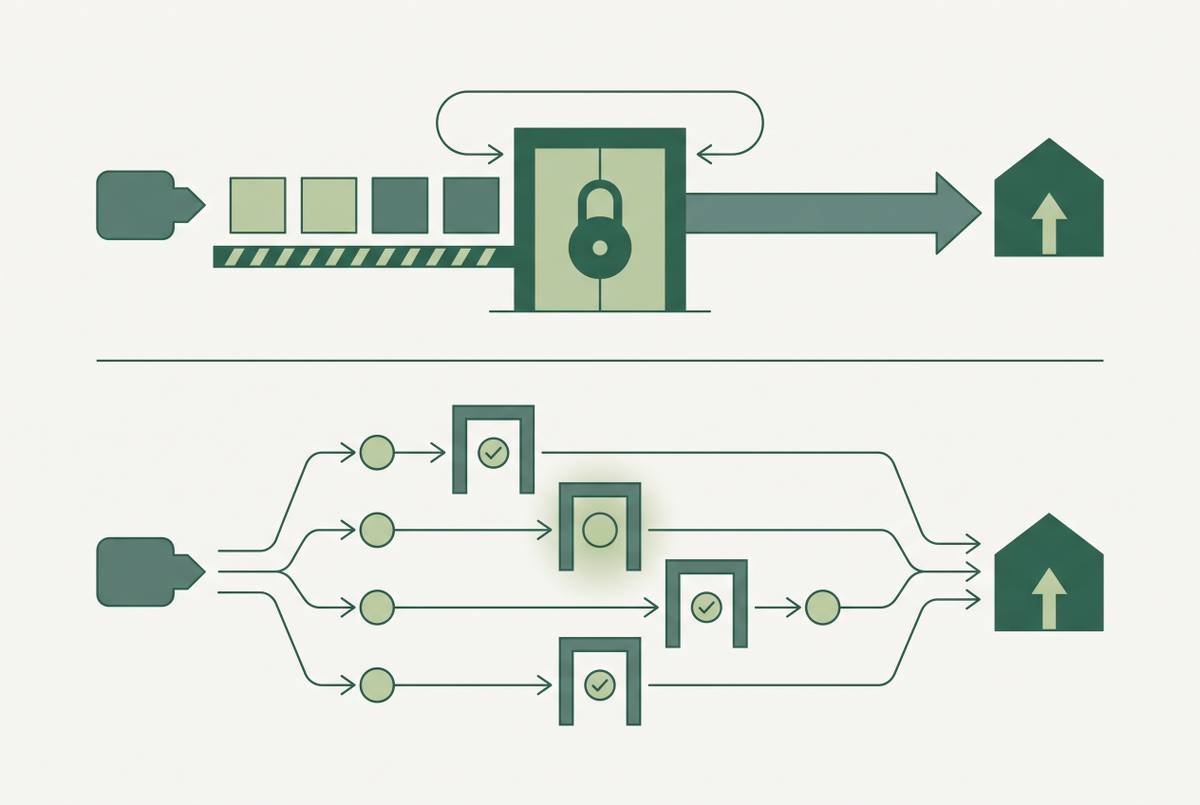
A step-by-step workflow moves a request through a fixed chain. Each reviewer must finish before the next one is told. This shape fits situations with a strict chain of command. Think budget authorizations, large capital purchases, or anything in a sensitive category like clinical supplies or regulated financial services. Its strength is a clear record. Nobody has to guess who approved something or in what order, because the order is the mechanism. The cost is speed. A four-gate chain for a large equipment purchase can take many days, and that is by design.
A simultaneous workflow sends the same request to multiple reviewers at once. This works when no single person holds full authority. A new software contract often needs legal to check the terms, finance to check the cost, and IT to check security — all at the same time. None of the three can sign off alone. The trade-off is coordination. What happens when legal flags a problem and finance approves the same day? Someone has to own that conflict. If the workflow does not say who, the fix becomes an informal negotiation with no record attached.
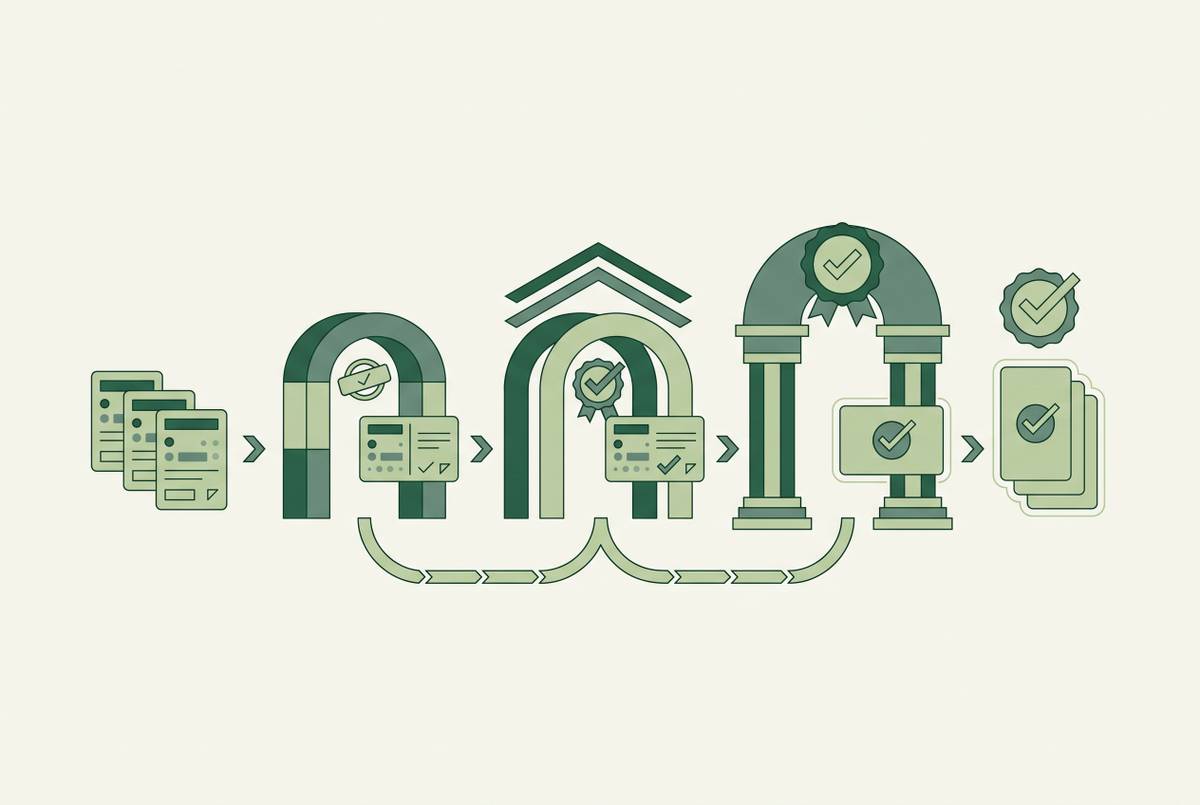
Most large procurement systems end up as combinations. They use step-by-step gates that contain simultaneous sub-stages. A department-level review might trigger legal and finance checking in parallel before the request moves to the next gate. That structure is really an accountability choice. Step-by-step gates hold senior review in reserve until lower gates clear. Simultaneous review spreads risk assessment across functions but can blur who owns the final call if the workflow does not force a tiebreaker.
Spending thresholds: the most common way to decide which gate a request goes to
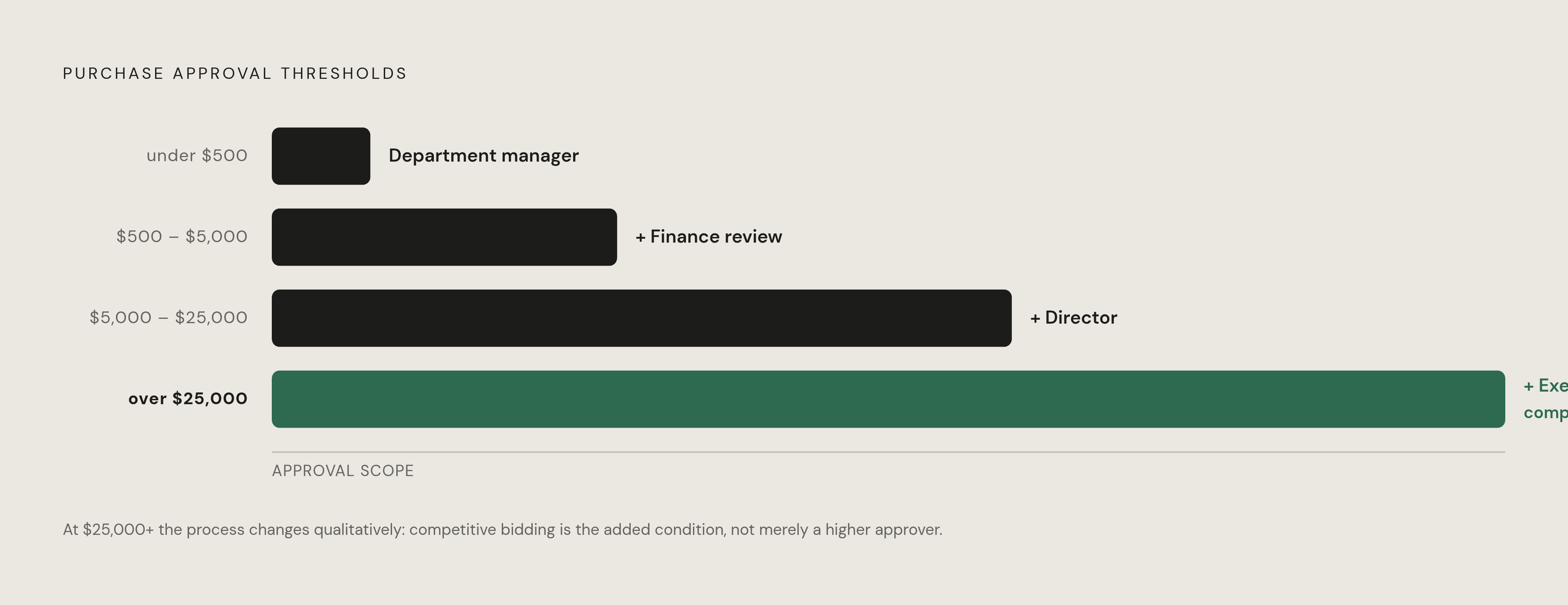
Spend thresholds route requests to the right level of review. An illustrative policy might use manager approval below $500, add finance from $500 to $5,000, require a director from $5,000 to $25,000, and add executive review above $25,000. These amounts and roles are examples, not requirements. Your organization sets its own thresholds, competitive-bidding rules, and non-financial risk triggers.
The logic is simple. It keeps senior attention on purchases that carry real financial or reputational risk. Routine office-supply orders and small subscription renewals do not sit in a queue waiting for a senior leader's calendar to open up. That is the point of a threshold system. It matches the level of scrutiny to the level of risk, not to how the request happened to arrive.
Define thresholds and rules about combined purchases in writing. The workflow should detect attempts to split a purchase into smaller requests to avoid the required review. Risk signals — such as sensitive data access or a new supplier — can require extra scrutiny even at low spend.
What every gate needs: authority, evidence, and decision criteria
Most gate designs stop at "who approves this?" They never get to the harder question: what is this person actually being asked to decide, and do they have what they need to decide it?
Every working gate needs three things. Authority: the reviewer must actually hold organizational power to approve or block spending at that level and in that category. Evidence: the reviewer needs specific information to judge the request — budget availability, a business reason, vendor options, past purchase history with that supplier, and any risk flags already on file. Decision criteria: the reviewer needs to know in advance what conditions justify approval, what triggers an escalation to the next gate, and what single finding stops the request.
Where someone sits on an org chart and what they are actually allowed to decide are not the same thing. Mixing them up is a common design mistake. A finance reviewer sitting third in a four-step chain might carry more real decision weight than the department manager who signs first. That is because finance actually checks whether the budget line exists. Your sequence has to reflect where the real judgment happens.
None of this works if the intake form is weak. A well-built submission form captures the exact information every downstream gate will need — budget code, vendor history, business case, urgency reason. It captures all of this at the point of request. Skipping that step forces every reviewer to chase the requester for information by email. That delay makes people stop trusting the workflow and start looking for ways around it.
Emergency and exception paths are a governance design problem
Design an explicit emergency path. It needs qualifying conditions, a named decision owner, and a documented reason for using it. Set response and post-purchase review deadlines that fit your business risk. There is no universal 24–72-hour rule for all organizations.
The risk with emergency paths is that they bypass gates. Nothing replaces the control those gates provided. Once that gap exists, it tends to get used for things that were never real emergencies. "Urgent" is a much easier label to apply than "over budget" or "unbudgeted."
An exception path needs a qualifying trigger, documented authorization, a defined follow-up review, and monitoring for repeated use. Record who authorized the exception and why. A review after the purchase can assess the decision and identify corrective actions. It does not undo a missed pre-purchase control. Repeated emergency requests should prompt you to investigate the underlying process.
Track the cost of delay as well as the risk of moving quickly. Rush-order premiums, downtime, and time spent chasing approvals all belong in that comparison. Use your organization's actual costs rather than an industry average from a different business context.
The record the gate sequence is designed to produce
The record should be produced as work happens. Rebuilding evidence from email after a dispute is slower and less reliable than preserving it with the decision.
A decision record can connect the request, supporting records, policy version, reviewer or agent acting within set limits, approval conditions, action, and outcome. When AI contributes, keep the relevant model or tool version and the evidence used. Decide which information must be captured, who can view it, and how long it is kept.
The required record depends on your organization's policies, contracts, and applicable law. Define that record for the workflow. Then test whether you can retrieve it without rebuilding it by hand. There is no universal twelve-field specification for every procurement decision.
Role-based routing and built-in rules that make gate sequences stick
Role-based routing means every request goes to the person whose job actually covers that decision. Not to whoever is online. Not to whoever the requester happens to know in finance. Building rules into the workflow means thresholds, risk triggers, contract terms, and approval rules live inside the tool itself. They do not live in a policy document that half the company has never opened.
The order matters here. This is often called the "orchestration before intelligence" principle. Procurement teams need to unify intake, standardize the workflow, and get policies built in and enforced before adding AI tools on top. A gate sequence that people can already route around by hand is not ready for automation. Automating an inconsistent process just makes the inconsistency faster.
Once rules are built into the routing logic rather than shared as guidance, deviations stop being casual. Any departure from the standard path requires a deliberate override. That override itself becomes part of the record — which is exactly the point. A policy that lives only in a shared drive gets ignored quietly. A policy built into the routing logic gets either followed or explicitly broken. Explicit breaks are far easier to see and govern than quiet ones.
Where AI fits in the gate sequence
AI can cut repetitive review work while keeping your organization's decision authority in place. Start with tasks whose quality you can measure against known requests and outcomes.
AI can classify requests, pull together budget and supplier information, spot anomalies, suggest options, and carry out approved steps. For recurring purchases, you can let AI handle work within limits you have explicitly set and with current permissions. A person still approves before anything happens. Requests that exceed those limits or lack enough information should go to a person.
Strategic sourcing, new suppliers, large commitments, and exceptions need clear, accountable human owners. Your organization decides which steps require a person to approve and which an AI can handle within policy. An AI agent can prepare or carry out work without becoming the person accountable for the business decision.
Tools used outside the approved process create a separate visibility problem. Keep an inventory of AI agents and integrations. Monitor their actions. Have controls to pause or revoke access. An AI agent should not gain purchasing authority simply because it can access a tool.
Legal and compliance obligations the gate sequence must account for
Vendor reviews should cover what permissions the AI needs, where data is processed, what records are kept, and how an action can be stopped or corrected. These are concrete design questions for procurement, IT, security, and the business owner.
As of September 2026, the amended EU AI Act (European Union rules on artificial intelligence systems) applies its high-risk requirements from 2 December 2027, subject to transitional provisions. A procurement workflow is not automatically high-risk simply because it uses AI. Classification depends on the system's intended purpose and the criteria in Article 6 and Annex III. Where personal data is processed, GDPR (the EU's data protection law) accountability and documentation duties also apply. Design the records around the specific processing, risks, and applicable requirements. Current EU AI Act; GDPR.
Test the workflow on ordinary requests, conflicting reviews, missing evidence, and urgent exceptions. Review completion time, error rates, total operating cost, and business outcomes against the agreed baseline. Use the results to adjust authority and routing rules.
Sources
- Approval Workflows in 2026 (+ Step-by-Step Guide)
- Procurement Workflow Process: Steps & Examples
- Purchase Requisition Approval Workflow Guide 2026: Dept Heads
- Parallel vs Sequential Approvals in BPM: Choosing the Right Workflow Structure
- Procurement approval workflows for your business
- centerpointgroup.com
- Procurement Approval Workflow: Best Practices & Strategies
- Parallel vs Sequential Approval Workflows | Yoroflow Blogs