Approval Gate Architectures That Span the Full Finance AI Workflow Stack
Let agents draft freely, but make named humans approve consequential finance actions.
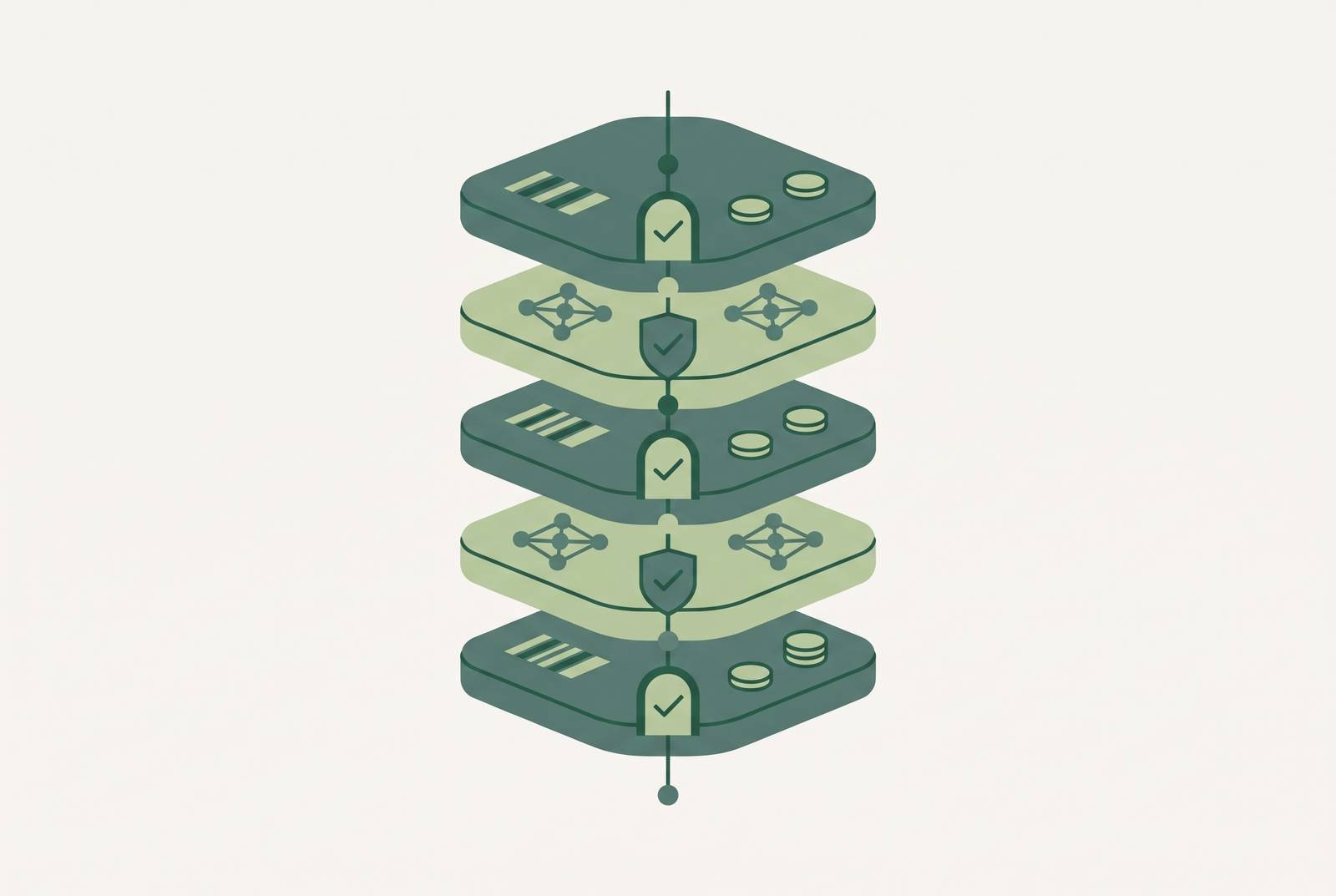
AI workflows for finance work best when agents can read, match and draft freely, while a named human must approve actions that have consequences. In accounts payable, that means separating invoice matching from payment release. Across journal entries, collections and credit, approval gates must be built into the workflow’s structural logic from the start.
Why approval gates fail when they are designed as a compliance layer rather than as the workflow's structural logic
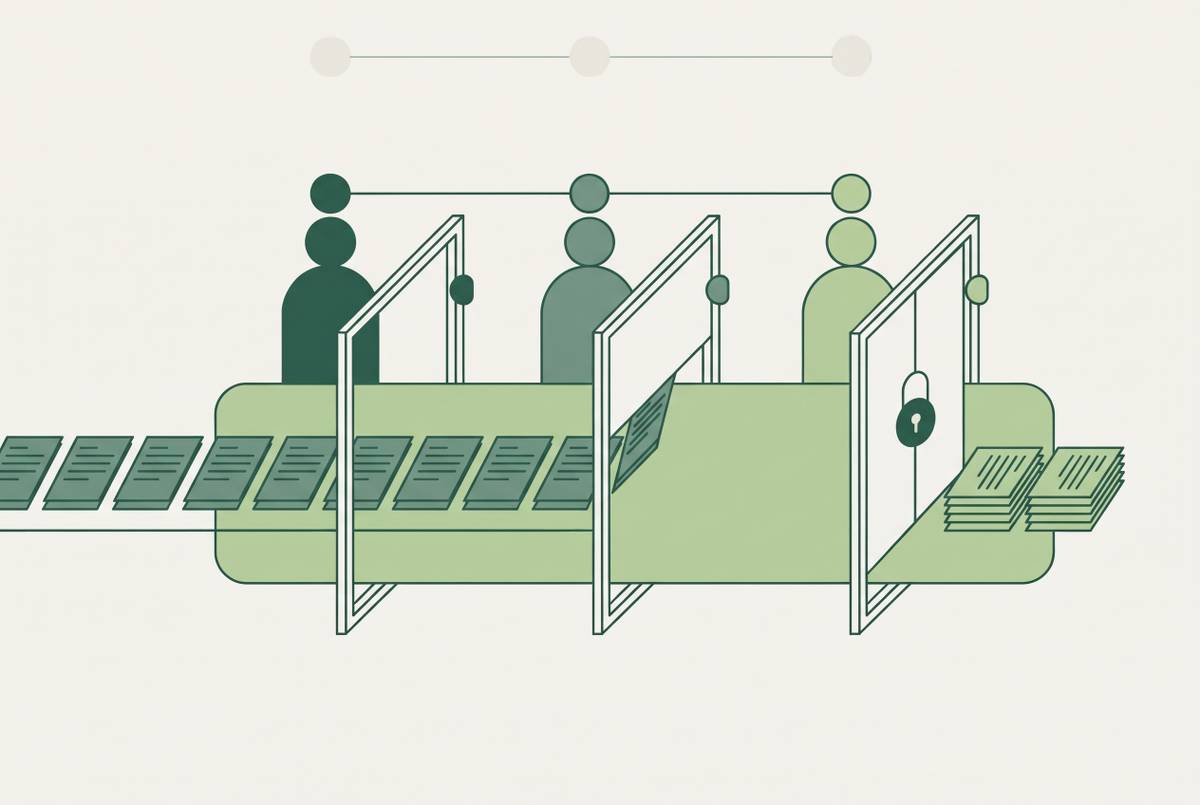
The finance team adds a review step, then another. Soon, the agent built to speed up delivery is waiting on a Thursday governance meeting. The agent itself may be working as it should. The team built the working system before deciding where its authority should end, so every unresolved control question now lands in a queue.
That queue is a governance design failure. Meetings become controls, evidence gets reconstructed after the fact, and each team governs its own agents. The resulting safeguards are only as strong as the least careful team. The corrective principle is to move controls into the path the work travels, so the platform prevents an agent from exceeding its authority rather than relying on a document saying it should not.
What regulators and auditors actually require from an approval architecture — and what they leave unspecified
External requirements leave that design work to the team. The revised interagency model risk guidance issued April 17, 2026, designated SR 26-2 at the Fed and OCC Bulletin 2026-13 at the OCC, replaced SR 11-7 but excludes generative and agentic AI models as novel systems. A formal request for information on bank AI use is coming. Meanwhile, a sponsor bank’s risk team needs to explain a fintech partner’s agents to its examiners. The EU AI Act’s Annex III high-risk obligations, which include credit scoring, are due December 2, 2027.
The practical requirements translate into six platform capabilities. Every agent needs a machine-enforced scope, and every action needs enough logged context to reconstruct it. Approvals must name the human and identify the change approved. The platform must enforce who has authority to act, and the team must show where humans decide and why it chose those points. A team must also be able to stop one agent quickly without taking down other services that share its infrastructure.
These are proof requirements. A policy describing human oversight cannot establish that a particular action received it. The architecture has to produce that evidence during execution, rather than leave someone to assemble an explanation when an examiner asks.
The three-tier action classification that determines where gates sit and what they cost
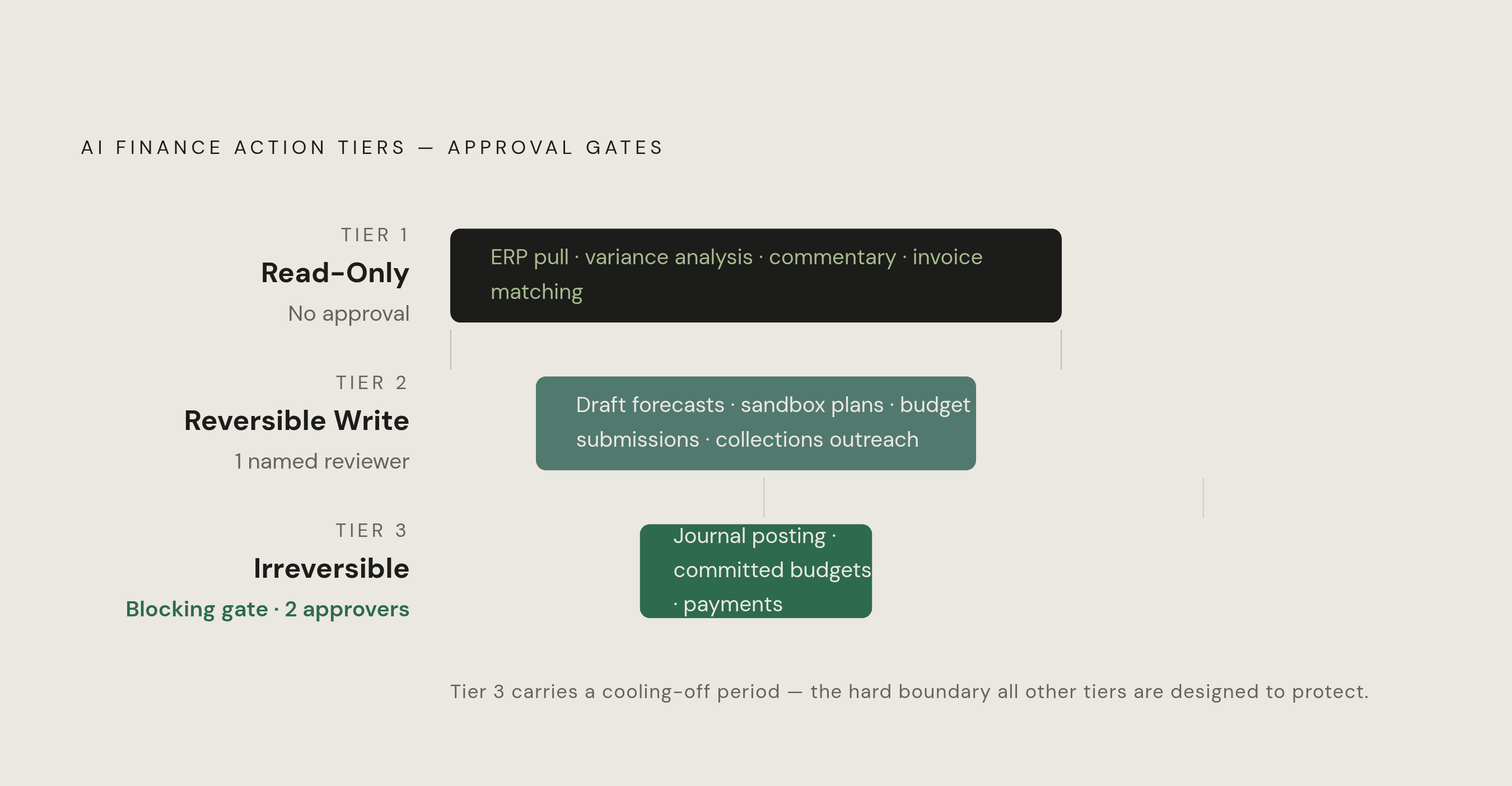
Design starts by assigning each action to a tier. Cleo AI’s FP&A approval workflow guide defines three tiers. Tier 1 is read-only work, which includes pulling ERP data, running variance analyses and drafting commentary. Invoice matching fits here when it makes no changes. There is no approval requirement because the action cannot commit a change.
Tier 2 covers reversible writes, such as draft forecasts, sandbox planning updates and prepared budget submissions. These need one reviewer’s sign-off before reaching a system of record. Draft collections outreach also needs a gate before it can be sent. Tier 3 covers irreversible or high-impact actions, including journal entry posting, committed budgets and payments. It requires two named human approvers, often with a cooling-off period.
For oversight to be affordable in practice, most activity should fall in Tier 1, less in Tier 2 and only a small minority in Tier 3. Having a person approve everything wipes out the gains in efficiency, while too much freedom to write can break trust after the first wrong commit. Money movement, client contact and changes to systems of record always pass through a person. Defining those boundaries before engineering is cheaper than correcting them in code.
The four gate types and why using only one of them is what produces the queue
An advisory gate logs the output and lets the work go on. It suits variance commentary that a human may choose to use, where visibility is needed but approval is not. The agent can continue its read-only work.
A validating gate pauses work pending sign-off and allows continuation once approved. Draft forecast sign-off works this way, with asynchronous review and a service-level agreement that sets the wait in hours. A blocking gate instead requires approval or halts the workflow. Payment release needs this stronger boundary because the payment must stop if no one approves it.
An escalating gate routes flagged cases to higher authority. Unusual transaction patterns, low confidence or high stakes trigger review, while unflagged actions proceed within their existing permissions. Escalation does not waive mandatory approval for money movement. Most workflows need two or three gate types.
Routing then determines how required reviewers act. Sequential approval suits a controller checking accounting treatment before a CFO approves the business decision. Parallel approval suits independent perspectives, such as FP&A and a business unit owner reviewing a reforecast. Timeouts need a defined outcome too. The gate reminds the assignee, escalates to a named fallback, then parks safely.
What the RACI mapping reveals about who may not approve what
RACI distinguishes the roles that are Responsible or Accountable from those that provide input or receive updates, and those distinctions determine approval rights. The reviewer must not be Responsible for the workflow being reviewed. A role judging its own work has an incentive to pass it, which compromises the gate’s independence.
The person approving must be Accountable for the gate outcome. “Compliance reviewed” is not a person’s name. Consulted roles, including legal, operations and executive sponsors, need to see the work but do not get approval rights by default. Informed roles, such as audit committee members, need access to the audit trail outside the active queue. Tier 3 needs dual approval, but that does not make every stakeholder with an interest in the work an approver.
Segregation of duties makes that independence enforceable. The person who triggered a run should not be able to approve it. Many platforms have no such check, so teams must send the gate to someone else and then check the ledger to make sure the person who triggered the run did not approve it. That manual control breaks under volume. The role mapping therefore determines both who may decide and whose name must appear in the record.
What the approval screen must show and what the audit trail must prove
A named approver is accountable only if the screen supports judgment. A yes-or-no prompt alone does not do that. The proposal must be short and complete enough for a decision in under a minute, without sending the reviewer away to find the underlying document. It must make the proposed action and relevant evidence visible, including the change being approved.
Automation bias makes this an engineering problem. A confident recommendation based on many signals invites deference when the reviewer has little time and only a summary. Approval policy therefore needs more than a confidence threshold. Relevant signals include action type, transaction value, account sensitivity, data completeness, policy exceptions, unusual activity, and model or tool failure history.
The audit record must preserve what the reviewer saw. An agent state diff, showing before and after values, makes the proposed change inspectable after the decision. Every proposal, decision, approver and timestamp must appear in a readable record, with a row showing who approved a change and when. Along with proof that scope is enforced, where humans decide and how agents can be stopped, that trail answers the six platform questions and shows more than a click on approve.
The critique layer: when a second agent is the most honest thing the approval gate can do
For the highest-stakes decisions, a clear screen still leaves an information gap. A loan officer who reviews a credit recommendation may be unable to see the model’s confidence distribution across the decision boundary or which inputs had the most weight. The summary may also hide whether the recommendation survives a regime shift or sector re-rating. The reviewer cannot judge what remains invisible.
High volume and speed deepen that imbalance. They make AI useful but leave humans less room to question its work, especially when it seems highly accurate. A separate critique agent addresses this problem before the recommendation reaches the approver. It independently challenges the output, surfaces assumptions, flags uncertainty and identifies regime signals that the primary agent may not have weighted.
The critique must be adversarial. Its job is to ask whether the recommendation holds under different conditions. The same kind of review can help with complex accrual entries, variance explanations that draw on more than one source and collections decisions shaped by a customer’s history. The human still decides. The second agent narrows the information gap enough to make that decision substantive.
What are the best AI workflows for finance teams across invoices, journal entries and collections?
Invoice processing shows why one workflow needs several controls. Reading invoices, matching purchase orders and flagging exceptions are Tier 1 activities with advisory logging and no approval pause. Preparing payment proposals moves to Tier 2, where one named reviewer validates the proposal, including invoices above contract. Releasing the payment run is Tier 3, requiring a blocking gate, dual approval and an explicit cooldown. The platform must exclude the initiator from approving, while the log records the proposal, decision, approvers and timing.
Journal entries require a similarly sharp drafting boundary. Generating draft entries, running variance analyses and preparing commentary remain Tier 1 when they do not change the ledger. Posting is Tier 3 and needs a blocking gate. Sequential review lets the controller verify accounting treatment before the CFO approves the business decision. The audit record includes before and after values, so an auditor can inspect the approved change.
Collections separates account analysis from customer contact. Finding overdue accounts is Tier 1, while draft outreach is Tier 2 and must pass through a validating gate before it is sent. High-value accounts and active disputes call for escalation to a senior reviewer when risk signals exceed the threshold. The log records the proposed communication, the decision, the named approver and the timestamp, preserving accountability for what reached the customer.
Credit adds the critique layer to high-stakes review. The primary agent produces the recommendation, and the critique agent surfaces assumptions and regime signals before a human decides. As a Tier 3 decision, it needs a blocking boundary and two named human approvals rather than an automatic continuation based on confidence. The approvers review both outputs, with the proposal and decision captured in the audit record.
What separates an approval gate architecture that finance and audit teams trust from one that gets turned off
In a well-designed system, Thursday is no longer the release schedule for ordinary agent work. Read-only analysis continues, draft writes wait for the right reviewer, and high-impact actions stop at enforceable boundaries. Finance teams get speed where speed is safe. Audit teams get evidence without reconstructing a sequence from partial records.
That distinction also changes the economics of oversight. Review costs belong in the return-on-investment model, rather than appearing later as an unexplained drain on the promised savings. Adding more reviewers cannot fix a single validating queue that handles low-stakes and high-stakes work in the same way. The team should test whether it can answer the six regulatory questions with platform evidence.
A cross-system AI platform can provide the policy engine and audit store needed to apply these controls across finance, operations and other enterprise systems. That reach exposes gaps a single-system workflow can miss, including an invoice that does not match the contract or a renewal the support team flagged but finance never saw. Those are consequential approval points. The platform’s value is in bringing the evidence and authority boundary to the place where the decision belongs.
Publication disclosure. This content was commissioned by the company behind the cross-system AI platform discussed here and produced with AI assistance.