How to Build an Audit Log for AI Decisions in Financial Reporting
Regulators now demand tamper-proof records of every AI-assisted financial decision.
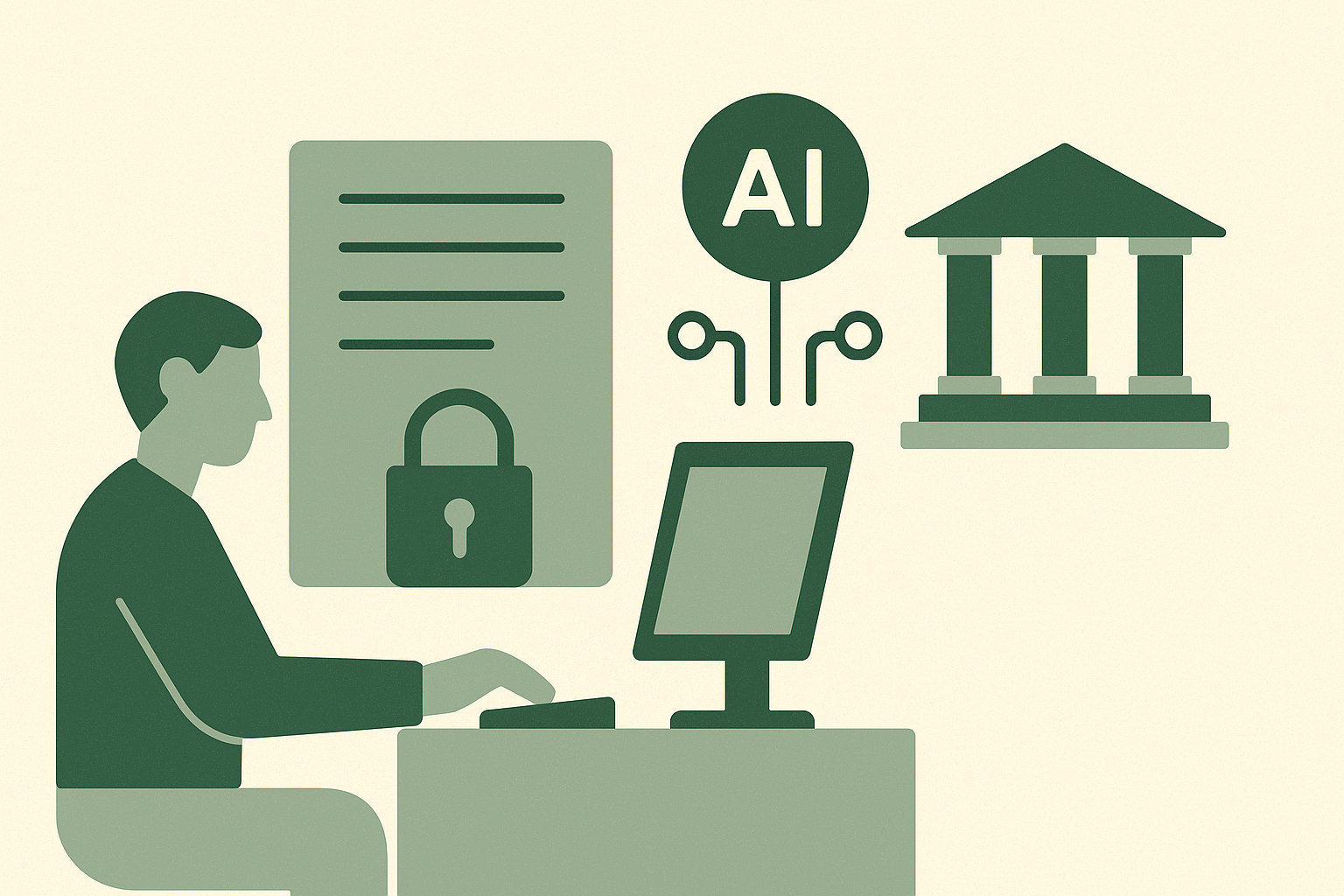
If your finance team uses AI to help make decisions, regulators now expect you to keep a detailed, tamper-proof record of every decision the AI touches. Three separate rule-making bodies released guidance in 2024 and 2026. They all say the same thing: keep the records, or face the consequences.
Why auditors are asking about your AI records right now
Three sets of rules landed at roughly the same time. COSO sets internal control standards for finance. It released new AI guidance in February 2026. The guidance says AI systems in finance must keep complete records. Those records must include inputs, instructions given to the model, outputs, the model version used, and any human review steps. The EU AI Act came into full force in August 2024. It requires companies to log how high-risk AI systems reach their decisions. The U.S. Treasury released its own AI risk framework on February 19, 2026. It lists 230 specific controls covering the full life of an AI system. Three bodies, three documents, one consistent demand: timestamped records, model version tracking, and human sign-off logs. Telling an auditor "the model decided" is no longer an acceptable answer.
The gap that opens when AI acts without a record
Imagine an AI system that recommends a price. Nobody writes down what it recommended, what rules it used, or whether a person approved it before it went live. A financial commitment now exists with no trail behind it. That is the real risk. It is not that AI gets something wrong. It is that nobody can reconstruct what happened after the fact. The same gap opens in a loan approval, a fraud flag, or a trade recommendation. Any AI-assisted financial process built without a decision chain leaves your team unable to answer the questions regulators are already asking.
The problem grows when AI moves beyond a single model call. It starts acting as an agent — a system that runs tool calls, hands work off to other automated processes, and takes actions across multiple systems. The record then has to reconstruct a whole chain of decisions, not just one model output. When an AI agent approves an invoice, logging the approval alone is not enough. The system has to capture why the agent approved it and what factors shaped that call.
AI that generates text or numbers is called generative AI. Feed the same inputs into a generative model a thousand times and you will not get identical outputs every time. Standard control testing assumes you can reproduce a decision and check it later. That assumption breaks down unless you capture every input, model version, and output at the moment the decision happens. Waiting to reconstruct the record afterward is not an option. The model itself cannot be counted on to repeat its own reasoning.
What a compliant AI audit record must include
A log that records only the final output will not survive a regulatory review. It does not give anyone the material needed to reconstruct how the decision was made. A complete record has to follow the full path from input to action.
- The exact input data and its source, so a reviewer can confirm the model worked from complete, unbiased information.
- Model identity pinned to a specific version, not just a family name. A decision must be matched to the exact model that was running at that moment.
- Confidence signals — the probability scores showing how certain the model was. A low-confidence output deserves more scrutiny than a high-confidence one.
- Timestamps at every stage: when the request came in, when the model ran, and when any downstream action was triggered.
- Data lineage: where the input data came from, and whether it was flagged, filtered, or changed before it reached the model.
- For large language models specifically (AI systems that generate text, such as the kind behind chat tools): the exact instructions sent to the model, the full model version string rather than a vague label like "GPT-4," the complete response, and the timestamp. A model updated last Tuesday can behave differently from the one that ran six months earlier.
- Human review actions: every approval, rejection, override, or escalation. Record who acted and when, inside the same record as the model's output — not in a separate system nobody cross-references.
- A link to the system-of-record entry the AI decision produced. This lets you trace the transaction end to end, with the reviewer's identity, timestamp, and decision attached.
Regulators expect this record to outlast the AI provider's own service. The underlying question an audit asks is simple: can your company prove that a given transaction, approval, or AI output was created and reviewed the way management says it was?
Why ordinary databases and application logs are not enough
Writing an AI decision into a standard database does not make that record tamper-proof. Standard databases allow records to be changed or deleted. A log that can be changed carries no evidentiary value for a regulator. An auditor looking at a "declined" outcome has no way to confirm it was not quietly changed from "approved" after the fact. An audit trail only earns its keep when it ties back to a business process, a source population, a control test, an exception, and a reviewer's conclusion — in a way that proves no retroactive change took place.
SOX Section 404 requires executives to certify the accuracy of financial records. MiFID II is the EU's main financial markets regulation. Both require records to be "resilient to erasure." That phrase has a specific technical meaning. Any change must be mathematically detectable, not merely forbidden by internal policy. A rule saying "nobody is allowed to edit this log" is not the same as a system that makes editing it mathematically obvious.
Large language models complicate this further. The reasoning inside such a model varies across version upgrades and sometimes even within the same version running twice. That means you cannot reliably reconstruct an AI's decision by re-running the same instructions later and comparing results. You have to capture the exact instructions, model version, and output at the moment the decision was made, in full — not as a summary written down afterward.
Three technical controls that together make a log tamper-evident
Real tamper-evidence in AI logging comes from three controls working together. Each one closes a gap the other two leave open. None of them does the job alone.
- Append-only writes: the system that records decisions has no permission to update or delete anything it has already written. It can only add new entries.
- Cryptographic chaining: each new entry includes a mathematical fingerprint (called a hash) of the entry before it. Insert, reorder, or delete a historical record and every fingerprint after it stops matching. That exposes the change immediately. SHA-256 is a standard fingerprinting method endorsed by NIST, the U.S. government's standards body. It is what SOX auditors expect to see. Older methods like SHA-1 and MD5 are generally no longer considered acceptable.
- Separate storage credentials: the system that writes a decision does not hold the keys that would let it change the audit log afterward. The writing path and the oversight path run through different access rights entirely. A compromised application cannot rewrite its own history.
Those three controls together make a single logged credit decision look like this: the model ID, the instruction template version, the input data, the model's output, the final decision, an approval timestamp in UTC (a standard world clock reference), the approver's ID, and a SHA-256 fingerprint of everything above, all written into an append-only log. Leave out any one of those fields, and the record stops being something a regulator can trust.
Why you also need to track changes to the model itself
A tamper-evident log records what the model did at a given moment. It says nothing about whether the model still behaves the same way it did when earlier records were created. That is the problem active model oversight is built to solve. COSO's February 2026 guidance identifies three things that belong on top of the log structure itself.
- Change detection: when a model changes — through a new version, adjusted settings, or updated training data — your control environment needs to catch that change as it happens, not months later.
- Impact checking: once you detect a change, confirm it has not broken an existing control. For example, check that a fraud detection model still catches the same fraud patterns it caught before the update.
- Re-validation records: document that the check occurred, what it found, and escalate any performance drop.
Some systems use embeddings — a technique for turning text or data into numbers a model can compare. If you upgrade the embedding model, old decisions stop being comparable to new ones. That breaks the audit trail unless you keep separate indexes for each model version in production. The same risk applies to any AI supplied by an outside vendor. Financial institutions need to track significant version changes their AI providers make. They also need to assess what those changes do to downstream processes. A vendor can update a model without warning and silently invalidate a prior period's audit trail — if you never kept your own copy of the original model version and its output logs. Keeping your own retained record of what ran, independent of what the vendor does next, is what prevents that kind of gap. This is the practical argument behind Nodes Engine's approach: it captures decision records linking evidence, recommendations, human reasoning, approvals, actions, and measured outcomes — including the ones that failed or came back inconclusive — so the record survives changes on the model provider's side.
Logging human review and exception decisions
Regulators want more than the AI's output. They want every human review action, override, and exception decision captured in the same structured record. Accountability for a consequential financial decision cannot rest with a model alone. An audit committee needs to know who owns a given model, what policy governs how it runs, and how conflicts get escalated. Each of those answers must trace back to a logged, versioned record.
High-risk financial decisions above a defined threshold require a human review step before anything is finalised. That step itself has to be logged: who reviewed the decision, what they decided, and when. You must define responsibility for exceptions in advance, not work it out case by case. A clear escalation process spells out which decisions an AI system can make on its own, which ones require a person to approve within set limits, and what triggers an escalation. That definition is itself a control, not a footnote in a process document.
When a reviewer overrides an AI's recommendation, the log has to capture that reviewer's identity, the timestamp, the outcome, and the reasoning behind the override. Without the reasoning, there is no way to tell a genuine, considered override from a rubber stamp applied without a second thought. A well-built system captures not just that a human looked at the decision. It captures what they saw, what they weighed, and why they ruled the way they did — as a permanent part of the institutional record.