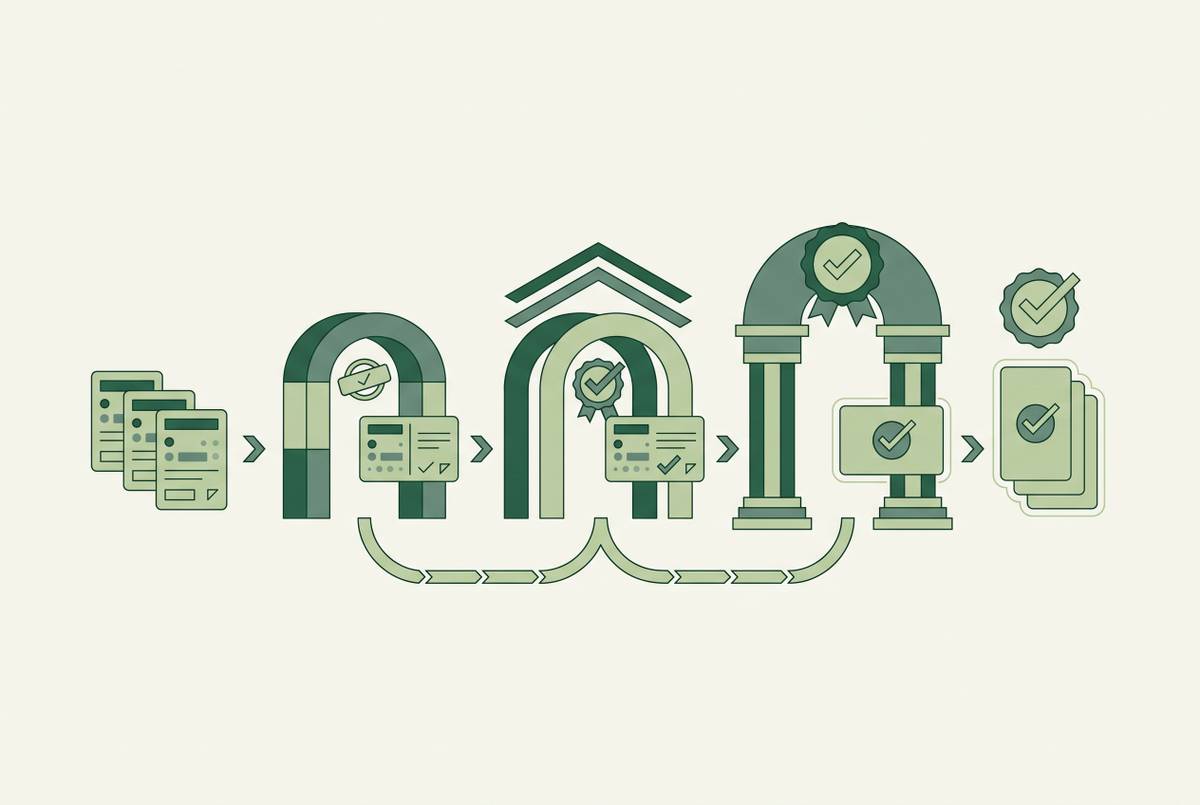
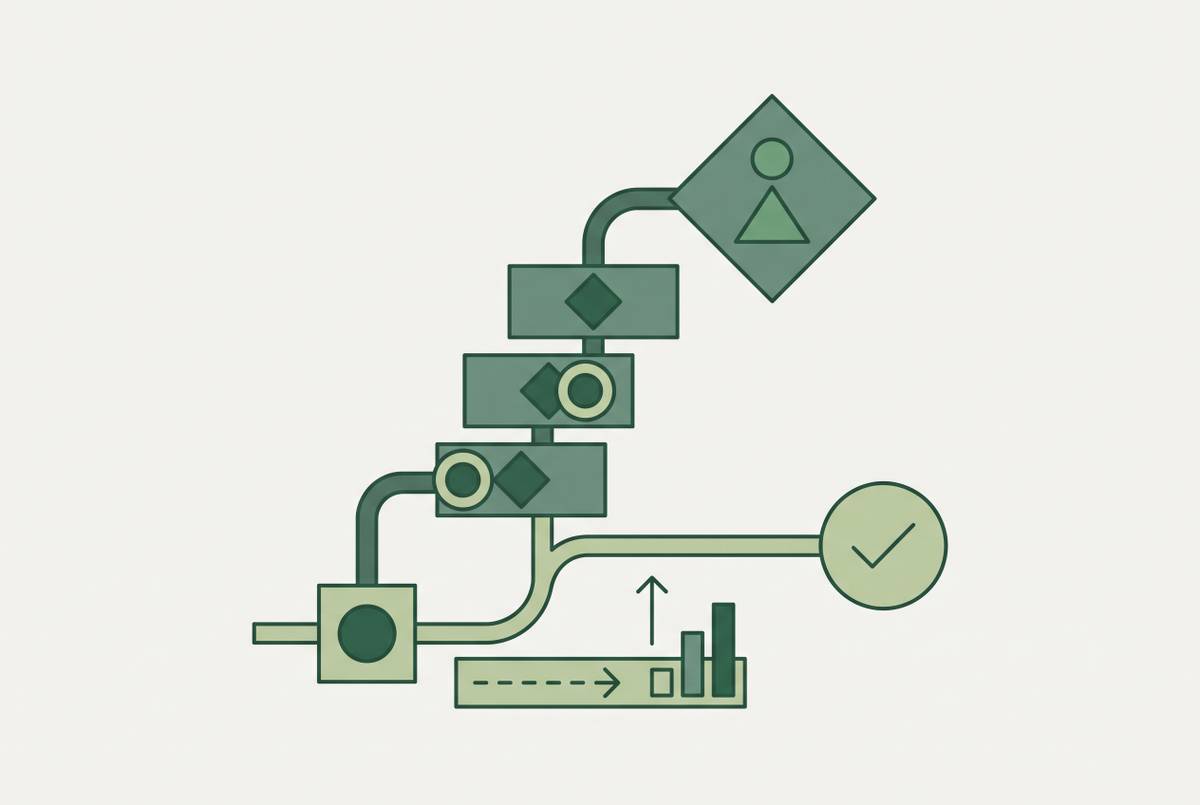
How to Measure Approval Gate Speed Without Losing Your Audit Trail
Richer decision records let you track gate speed and satisfy auditors.
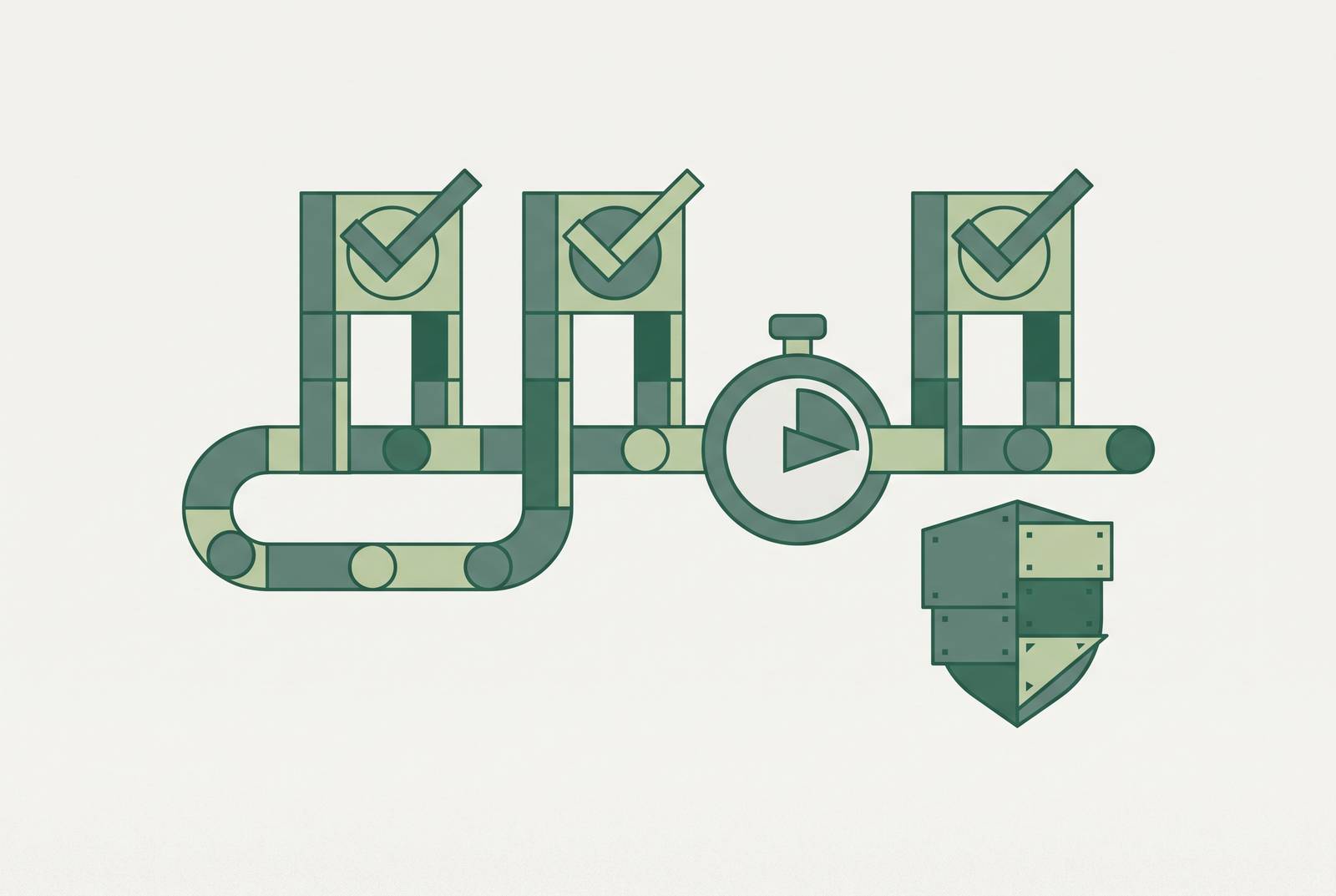
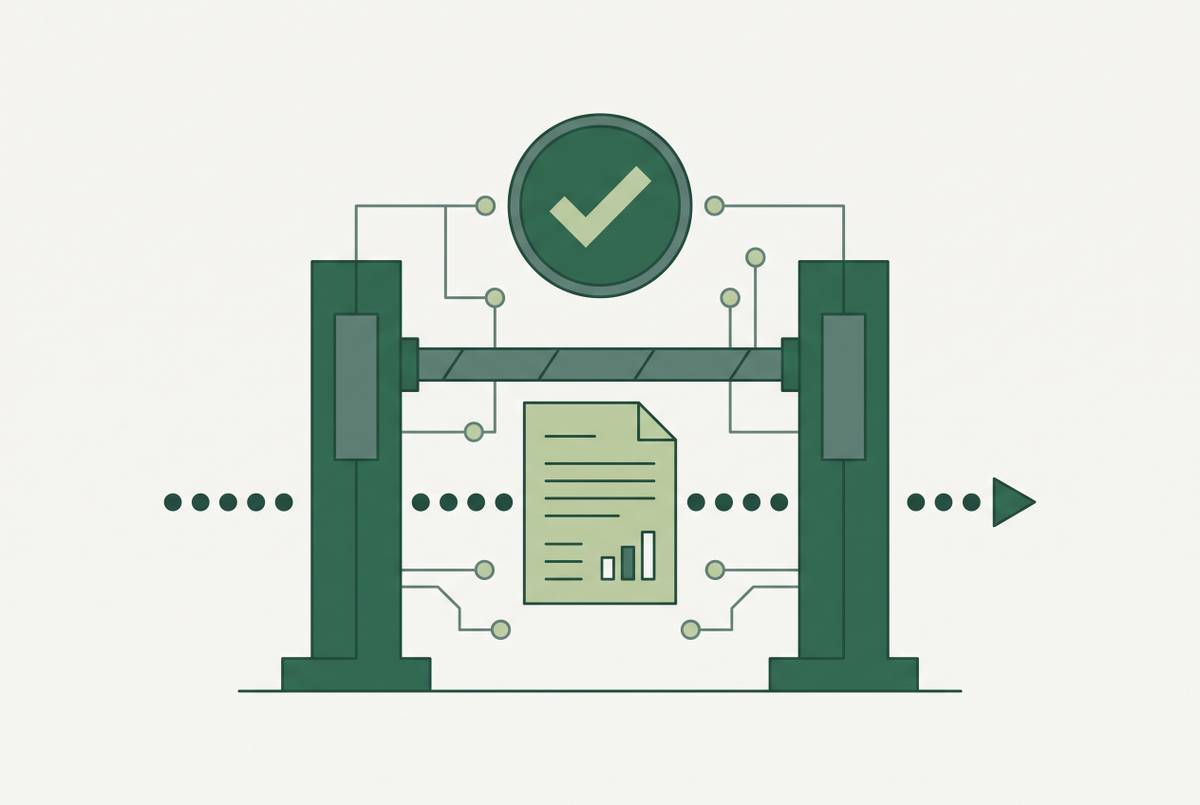
You can measure how fast your approval gates move and still keep a solid audit trail. The fix is the same for both problems. Record each decision with enough detail to answer a performance question or a compliance question later.
Picture this: a review item sits in a queue for three days. A reviewer opens it for under a second. Then they mark it "approved." That single word is what the auditor sees six months later as proof the control worked. Nobody can say whether the reviewer read the document. Nobody knows if they checked the AI's reasoning. Nobody knows if they just clicked through out of habit after hundreds of identical approvals. That gap between what actually happened and what the log says happened is the same gap that hides a bottleneck from an operations team trying to measure speed.
Approval gates put a human judgment in front of an action before it becomes irreversible. That is the whole point. But every gate also adds delay. Delay without measurement becomes a hidden problem on both sides of the business. A slow gate is a management problem. A fast gate can mean good design or rubber-stamping. The real failure is an unmeasured gate. You have no way to track how long items sit. You have no way to tell whether three days in the queue meant real thinking or just backlog nobody noticed.
The compliance risk runs along the same fault line. An approval record that stores only the word "approved" is one of the weakest things you can hand an auditor. It has no document version, no record of what was acted on, no note of who had authority to approve, no conditions attached, and no exact time window. Speed measurement and audit defense fail for the same reason. The gate was built to route a decision to the right person. It was not built to record that decision with enough detail to answer a performance question or a compliance question afterward. Fixing how you record the decision solves both problems at once.
What every gate decision record needs to contain
A gate decision record should treat each individual decision as the unit you measure and audit, not the whole approval queue. Each field earns its place by answering a specific question. It helps the operations team track speed, helps the auditor track defensibility, or usually does both at once.
A unique decision ID lets you trace a single action from the moment it enters the queue to its final outcome. That is the only way to calculate how long it sat. It is also the only way an auditor can follow one thread through a chain of connected events. A matched timestamp at every change of state makes that calculation possible. It records when the item entered the queue and when it was approved, so you can work out how long it took.
Recording which individual approved something matters more than almost any other field. This is the most common gap in enterprise AI setups. AI accesses regulated data under a shared service account or software key. No log records which person directed that access. HIPAA (the US health data privacy law), GDPR (the EU data protection law), and SOX (the US financial reporting law) all require that actions be traced to a named individual. A shared account cannot provide that, no matter how complete every other field looks.
Where AI prepared a recommendation behind a decision, the record needs the AI system and model version tied to that specific decision. A general note that AI was involved somewhere is not enough. A plain-language explanation of why the decision was made belongs in the record too. It lets you reconstruct a reviewer's thinking later. It is also the raw material that time-spent metrics depend on. A tamper-evident integrity proof (a mathematical check that shows whether the record has been changed) closes the record out. It turns a log entry into real evidence.
How time-on-decision metrics separate real review from checkbox clicking
Faster cycle times are not automatically good news. If the gate is clearing items in under a second because reviewers are clicking through without reading, the gate has become an audit liability dressed up as an efficiency win.
Time-on-decision is the time from when a reviewer opens a record to when they submit a decision. It separates considered review from pattern-clicking. You need to track it by reviewer role, by risk level, and by decision type. Rolling it into a single average hides which categories are being rubber-stamped and which are getting real attention.
None of this works if the reviewer has nothing to actually review. A gate that shows a reviewer only "approve" or "reject" turns that reviewer into a formality by design. Approval gates work best when the AI provides its reasoning or supporting evidence alongside the recommendation. The record of what evidence was shown at the moment of decision is part of what makes the gate defensible later. That means the gate system has to log the evidence bundle itself. It needs the document version, the AI's stated reasoning, a confidence level, and any relevant background. That way an auditor can confirm the reviewer had what they needed to decide.
Risk-tiered thresholds (different rules for different levels of risk) give the time-on-decision number somewhere to land. A low-risk, reversible action with a clean policy match can reasonably clear fast. A high-risk or irreversible action should carry a minimum time standard. A decision that falls under it should trigger a check by a supervisor. These thresholds can sound arbitrary, even a little patronizing to reviewers who already know their job. They are not new standards being imposed from outside. Every service-level agreement (a commitment about how quickly work gets done) already carries an implied expectation about how much attention a decision deserves. Making the threshold explicit turns that expectation into something you can measure and defend later.
AI preparing the recommendation and bundling the evidence does not weaken this discipline. It strengthens it. The reviewer works from the actual material the decision depends on instead of pulling context together by hand across separate systems.
Queue depth, wait times, and escalation rules as things you can manage
A gate that quietly builds up a backlog is a worse failure than a gate that is simply slow. Items sitting in the queue age past the point where the evidence behind them is still current. Reviewers under pressure start clearing items just to keep the number down. The gate that was built to protect quality starts producing the exact rubber-stamp pattern it was designed to prevent.
A metrics layer needs to track approval rate, average time items wait in the review queue, and time-to-decision broken out by decision type. Once wait time exceeds the agreed service level, the gate has stopped working as a safeguard. It has started working as a bottleneck. You need to review these numbers by risk level on a fixed schedule. Do not wait for an incident to force someone to go looking.
Timeout and escalation rules turn a passive dashboard into an active control. When a review item sits in the queue past a set time, it needs to escalate to a supervisor or be rejected automatically. That set time varies by risk level and urgency. This keeps the system from locking up. That is a governance design requirement, not a nice-to-have.
The escalation event itself needs the same logging detail as an approval or rejection. Record who the item went to, when, under which rule, and how it was resolved. An escalation that is not logged is invisible twice over. Auditors cannot see it. The performance dashboard cannot see it either. It is the same recording gap producing both blind spots.
Queue depth trends reveal something that tracking individual items never will. A gate whose wait time is climbing week over week is signalling one of two structural problems. Either review capacity has not kept pace with volume, or the approval criteria are unclear enough that reviewers are deferring decisions instead of making them. Someone specific needs to own these metrics. The team that owns policy and thresholds is responsible for acting on rising wait times. The team that owns system reliability is responsible for acting on escalation failures. Without named owners, the numbers get reported in a dashboard and nobody acts on them.
What the EU AI Act, SOC 2, and COSO 2026 require from gate records
Three regulatory developments in 2026 turned AI audit trails from a good idea into a legal requirement with real financial penalties attached.
The EU AI Act reaches full enforcement on 2 August 2026. It carries significant financial penalties for non-compliance. Those penalties cover high-risk AI systems, including transparency duties and documentation obligations that gate records exist to support. The Act's rollout has moved in stages. Bans on prohibited practices applied from February 2025. Obligations for general-purpose AI models took effect in August 2025. Transparency duties apply from 2 August 2026. Rules for high-risk systems under Annex III apply from 2 December 2027, pushed back from the original 2 August 2026 date by the Digital Omnibus on AI. Enterprises that have not aligned their gate records to these requirements are already operating inside the Act's scope. They are not preparing for some future deadline.
SOC 2 (a widely used US security and compliance standard) reinforces the same discipline from a different direction. Logging who approved an action, when, and any override reasons at every gate transition supports the compliance goals behind SOC 2 and the EU AI Act. SOC 2's criteria are principles-based and do not require these exact fields at every transition. Even so, the same log structure that satisfies an auditor under either framework is also the raw input a wait-time metric is built from.
COSO's February 2026 guidance on generative AI and internal controls sets perhaps the clearest bar. COSO (the Committee of Sponsoring Organizations) publishes widely followed guidance on internal financial controls. Under that guidance, effective monitoring requires a complete audit trail. It must capture prompts, inputs, outputs, model and configuration versions, and evidence of human review. It must be enough to reconstruct what the AI acted on and to show the control worked as designed. That is the standard a gate record has to meet for any AI-assisted approval.
The SEC added its own pressure in March 2026. It announced a dedicated SOX enforcement group targeting audit firm misconduct. Current SEC leadership has signalled the group will focus on serious misconduct rather than technical internal-controls-over-financial-reporting failures. The unit has since been folded into the broader Financial Reporting and Accounting Unit announced August 5, 2026. AI-touched controls sit squarely inside that unit's scope.
Across all three, tracing actions to a named individual is the hardest requirement to meet. It is harder than retention period or storage format. When AI prepares a recommendation under a shared service account and no log records which individual reviewed and authorised it, the gate record fails the individual-attribution requirement in HIPAA, GDPR, and SOX all at once, in a single stroke.
Why your log storage must be append-only and tamper-proof
Audit integrity requires a specific technical approach to how you store a gate log. You need append-only architecture with object lock and cryptographic verification. Append-only means that once a transition event is written, you cannot change or delete it. You can only extend the log with new events added on top. Corrections, overrides, and exceptions appear in the chain as new records. They never appear as edits to something that already exists.
That design choice matters a lot for how the log handles change over time. If an approved action gets revoked later, escalated, or found to have run outside its authorised scope, that entire sequence needs to appear as a chain of linked events. Each event carries its own timestamp, actor, and reason. The history has to stay visible as history, not disappear into a silent edit to the original approval.
Human corrections and exception notes belong inside this same structure. When a reviewer overrides a system recommendation, that override should be a proper log entry. It should include the stated reason and link back to the original decision ID. It should not be a comment buried in a separate system or an informal note somewhere else. This is where many enterprise setups quietly fail. The structured gate log captures the approval cleanly. But the actual reasoning behind an override lives in an email thread, a chat message, or a document nobody linked back to the decision. Auditors end up piecing together approval history from inboxes and screenshots.
Tamper-proof does not mean inaccessible. The log still needs to be searchable. You need it for wait-time metrics, reviewer performance trends, exception rates by risk level, and escalation rates across the system. The storage setup has to support both tamper-evidence and analytical access at the same time. A log that only serves archival retrieval is not doing the job either side of this problem needs it to do.
Separating who can read from who can approve at each gate
A gate decision record is only as trustworthy as the permission rules standing behind it. If the same identity that prepares a recommendation can also approve it, the gate has stopped working as a control. It has become a formality the log will faithfully record, approval after approval, with no real decision inside any of them.
Read access and write authority need to be separated at the system level. The permission settings themselves must enforce this. The AI agent or system that looks into a case and assembles the evidence should carry read permissions only. The human approver, who approves within limits they set, should hold the write permission that carries out the approved action. Neither side should be able to use the other's authority. This must be true by design, not just by agreement, which is how Nodes, AI for accounts payable, receivable, month-end close and spend, handles it by starting read-only and making nothing change without a person's yes.
An AI governance framework puts this into practice by assigning named individuals to oversight roles. It requires specific testing at defined intervals. It builds escalation paths that keep working even when nobody is actively watching. Named accountability becomes operational rather than a policy statement sitting in a binder. The permission settings enforce it.
That same role separation needs to extend to who can set up the gate itself. The team that owns policy and thresholds should be separate from the team that owns system reliability and access controls. Any change to gate configuration needs logging with the same detail given to gate decisions. Configuration changes are a documented blind spot across many setups. An approval threshold gets quietly lowered. A risk level gets reclassified. An escalation rule gets disabled. Configuration events appear in the decision log only when you treat them as proper entries in their own right. They need the same identity, timestamp, and reasoning requirements as every approval that passes through the gate.