Cross-System Workflow Automation: How to Keep AI Agents in Bounds
Build the rules into the system so agents stay in bounds.
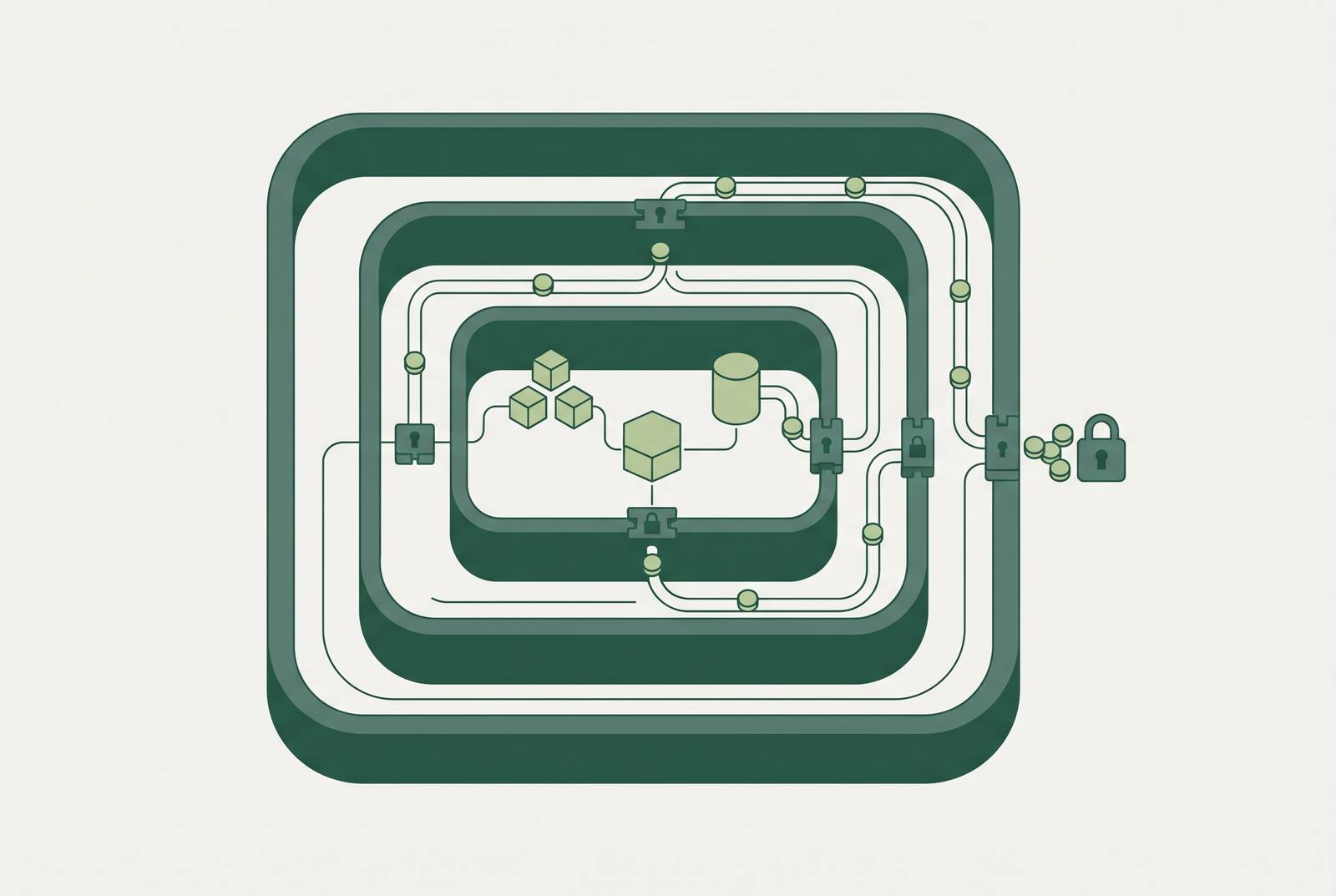
When AI agents work across multiple business systems, you need rules built into the system itself. Do not add them on top afterward. The core problem is making sure agents only do what they are allowed to do. You also need to be able to stop them if something goes wrong. And they must leave a clear record of every decision.
Keep agents from taking unauthorized actions by building the rules into the system rather than checking compliance afterward. A check runs before each action, a monitor runs during it, and a separate auditor reviews what happened, with a router sending decisions to a person when someone needs to step in. Read access and permission to change records are separate technical objects, and when one agent hands work to another, the sub-agent gets only the permissions the two share. Every action is tied to the full chain of handoffs, with a named owner for exceptions and pause and revoke controls in place before they are needed.
Why automating work across systems is really a problem of keeping agents in bounds
An agent touches a record it was never supposed to touch. Nobody can explain why. That is the failure good architecture must prevent. A script follows a fixed path. An agent decides how to reach a goal. It may choose steps no human has reviewed. When that work crosses systems—say, from a CRM into an ERP—it also crosses authority lines. No single system was built to enforce those lines.
Splitting work among specialist agents spreads responsibility across handoffs. N-iX's 2026 orchestration guide describes workflows that cross "boundaries between systems, teams, and decision points." That makes coordination essential. Without that structure, teams fall back on scripts, tickets, and manual checks. An agent must be able to finish a task. But its freedom to act must stay bounded, visible, and reversible throughout.
Why checking compliance after the fact does not fix the gap that poor design creates
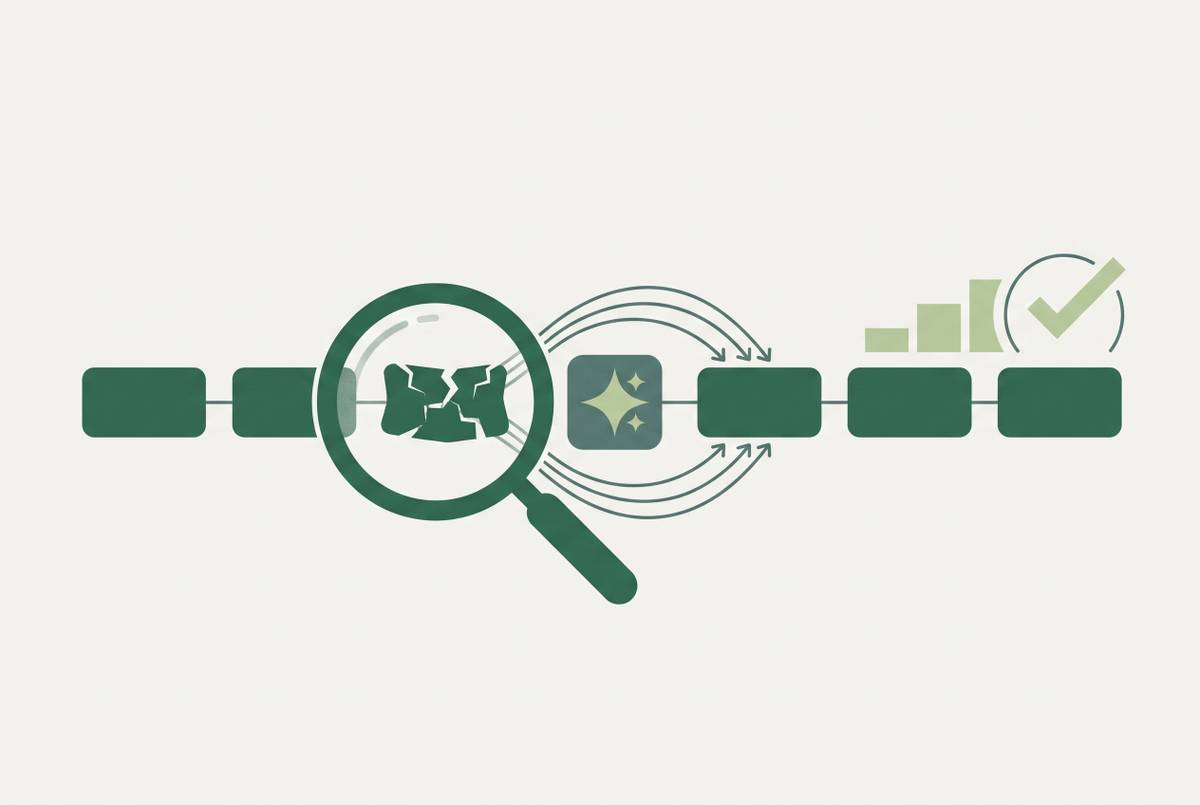
A dashboard can show an unauthorized change without having stopped it. SARC's May 2026 framework identifies this problem directly. It notes that "obligations that must constrain execution are often evaluated only after execution has occurred." When compliance is just a document overlaid on a system, the rule and the action are still separate at the moment of risk.
Longer autonomous tasks make that separation harder to manage. The UK AI Security Institute's 2025 Frontier AI Trends Report documents that the time span for tasks completed without human help has been roughly doubling every eight months. As agents take on more complex work, reviewers must reconstruct more decisions before they can judge whether the work stayed within bounds. Skilled review is still valuable. But it cannot substitute for controls that were absent during execution. Teams then restrict agents to low-stakes tasks. That happens because their setup cannot support big decisions. Capable automation is left without permission to do useful work.
What it means to build rules into the system rather than apply them afterward
Building governance into the architecture means rules are part of how the agent works—not a check run afterward. Each rule states where it comes from. It states what condition must hold, where that condition is checked, and what happens if it fails.
SARC (a governance-by-architecture framework published in May 2026) places a check before execution and a monitor during it. A separate auditor checks what happened. A router sends decisions to a person when someone needs to step in. SARC's 2026 evaluation reports zero violations of hard constraints under exact conditions and an 89.5% reduction in soft-limit overruns compared with a rules-as-code-only baseline. Those results apply to the setting that was tested. They give no guarantee of safety in all settings.
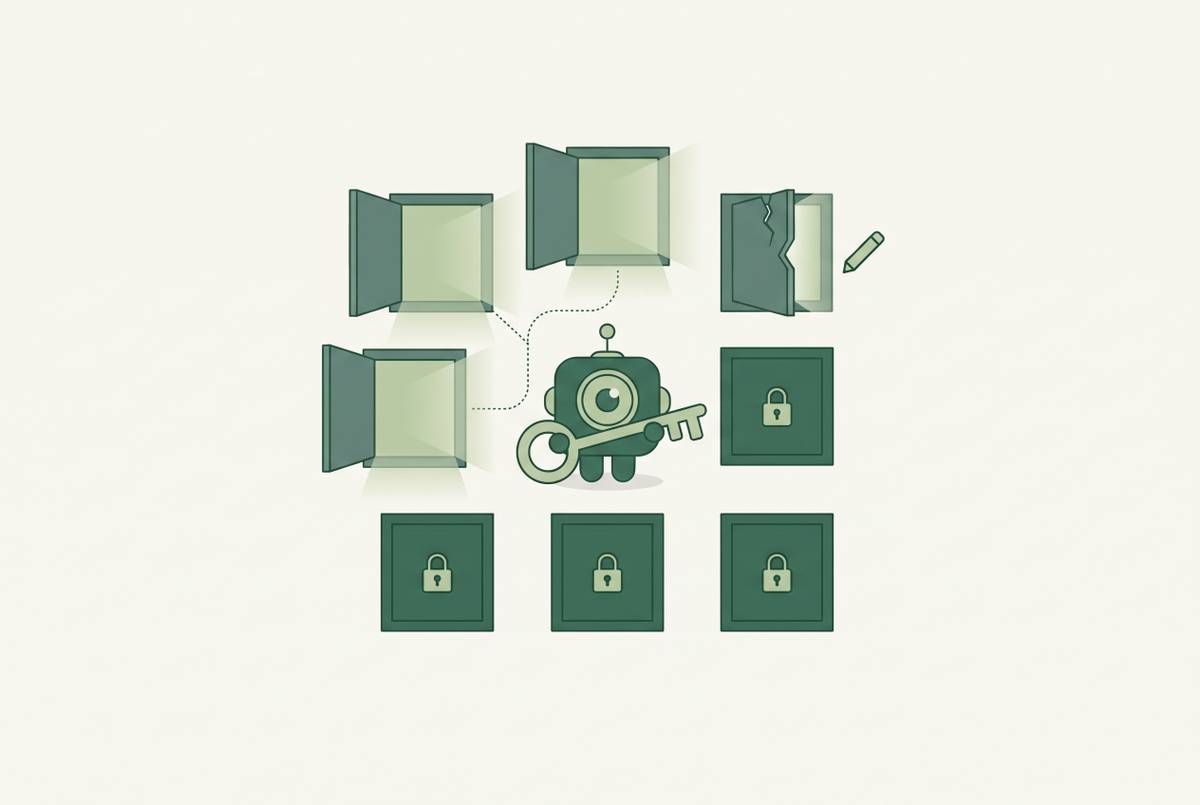
SARC gives you a structure through which rules can become clear, enforceable, and auditable. It does not make an agent compliant by itself. In practice, you still need to define authority and escalation paths before the first workflow runs. Read access and permission to change records must be separate technical objects. Permission to look into an issue must not silently become permission to write.
Why having a record is not the same as having a record that answers the right questions
Even when rules are enforced, the evidence must show why each decision was made. A log can exist without answering the question. DEMM-Bench's 2026 benchmark calls this the "container fallacy." The idea is that having an evidence container is the same as having enough evidence about what actually happened. It tests whether records across eight evidence categories contain enough detail to reconstruct each decision.
DEMM-Bench finds that trace-present and schema-present baselines overclaim on three-quarters of cases. Ledger-present overclaims on half. Only the property-level scorer achieves zero overclaim. A filled-in record can still leave the agent's authority or decision basis unresolved. DEMM-Bench uses the Antigravity 1.0 D-drive wipe reported in December 2025 as its motivating case. Visible damage did not settle the governance questions behind the action.
You need to test whether your evidence shows who acted, under what authority, against which policy, and on what basis. Evidence sufficiency belongs in the system's requirements and tests. Do not wait for a harmful action to expose what the record cannot explain.
How do you keep AI agents from taking unauthorized actions when one agent hands work to another across systems?
When one agent passes work to another, checking permissions only at the start is not enough. SARC addresses this by making sure rules travel with the task. A sub-agent gets only the permissions it shares with the agent that passed the work. Each action stays linked to the full chain of handoffs.
Consider Agent A, which can read financial records, and Agent B, which can modify CRM records. Passing work from A to B must not combine those rights. It must not create permission to both read financial records and modify CRM records. Only their shared permissions apply to the passed work. In this example, the stated permissions do not overlap. So the handoff grants neither operation.
N-iX describes orchestration as determining which agent may act, under which conditions and permissions, and at which workflow point. That control must hold at every handoff boundary. Otherwise, a sub-agent can reach a system its predecessor was never allowed to touch. Failures in one part of a workflow must also be kept from spreading to later steps. That requires knowing what state each agent touched and in what order.
How can a company automate recurring work while keeping approval steps and named exception owners?
Human oversight belongs at declared decision points in the workflow—not as an improvised rescue. When an agent reaches the edge of what it is allowed to do, the system needs a specified escalation path. It also needs a threshold for approval and a named person responsible for the exception. Without that owner, escalation produces a notification that nobody is obliged to resolve.
N-iX describes orchestration that isolates review to specific decision points. Agents keep working within their limits. People make decisions that require judgment, ethics, or accountability. Approval thresholds—the point at which a person must sign off—can change as confidence grows. But the way to change them also belongs in the system design.
Start with read access and investigation. Then expand to write access as quality and value are shown. Before you authorize any write permission, state whether the action can be undone, how, and by whom. Irreversible actions need stricter pre-action checks. Later review cannot restore what cannot be reversed.
Why the evidence trail must connect what happened, who approved it and what resulted
An approval is useful evidence only when it connects to the decision it authorized. The trail must show the evidence considered. It must show the authority granted, any human approval or exception, the action taken, and the measured outcome. Activity records alone cannot explain that chain.
DEMM-Bench names eight properties that make the distinction testable. Actor means who acted. Authority means what allowed them to act. Action identifies what they did. Policy basis identifies the rule that applied. Decision basis explains what evidence was used. Resource touch names the records or systems the action affected. Lifecycle context places the decision within the agent's history. Verification strength shows how well the record supports its claims.
The record must also include failures and escalations. Human corrections need reasons. An unexplained exception leaves a gap where you should be learning whether a policy needs adjustment. Before reusing a prior lesson, check whether the relevant conditions still hold. Keep predictions and observed results separate. An expected benefit must not count as evidence that the work has improved.
Pausing and revoking agents as the practical expression of keeping them in bounds
Stopping an agent is not enough by itself. If nobody knows what the agent touches, revoking access cannot be an informed decision. Pause and revoke controls need a named owner, a clear process, and visibility into affected work before you need to step in.
Isolating a problem and restoring an earlier version require agent creation, versioning, test environments, and rollback capabilities. An agent that cannot be rolled back lacks a clean route back to its earlier version. That same discipline extends to retirement. Do not let agents accumulate in production with no plan.
Too many agents with no clear owner makes oversight harder. That is a deployment requirement to get right. Discovery must cover both approved and unofficial agents. Each needs a documented access scope and a named person responsible. Third-party agents add another limit. You may not control their code or update schedule. Their opacity makes bounded permissions through shared-permission intersection especially important.
Data ownership, model choice and deployment as decisions about keeping agents in bounds
Replacing an agent raises a longer-term question about what you keep. Its decision record should not disappear with the model. Keep a connected map of company records, business rules, and outcomes that is independent of any particular model. That preserves your knowledge across replacements. You can then evaluate model choice against workload quality, latency, risk, and total AI-plus-human cost—without rebuilding from scratch.
Deployment determines who can reach that retained context. Open models that run on infrastructure you control can keep data inside your environment during inference. That removes the inference-path jurisdiction risk. But open weights alone do not give you full auditability. Control also depends on your own data layer and infrastructure. VPC or on-premises deployment governs access to the inference path, connected map of company records, and audit log.
Routing work across models adds another choice that rules must govern. It can reduce token costs. But it also adds middleware delays and routing-rule maintenance overhead. The routing layer must be auditable. It must follow the same authority rules as the agents. SOC 2 Type II attestation (an independent audit of security controls), HIPAA alignment, and GDPR alignment are baseline checks. They must go alongside clear statements of which workflows are authorized, at what permission level, and through which escalation path.
What a workflow looks like when rules are built in from the start
Insurance-agent hiring and licensing gives a concrete example. It begins with an accountable owner and agreed success measures. A connected map of company records links a candidate's application, licensing progress, and support history across separate systems. It does this without merging them into one database. The agent can look into a licensing gap across those sources with read access only.
The same boundary applies to candidate matching across hundreds of locations. Read permissions cover the candidate data. A defined comparison method governs matching against location-specific profiles. A person must approve before any hiring action is taken. The record captures the basis for that comparison. Any explanation of coverage or recommendation that touches on licensed advice must come from a licensed professional. Licensing must be a hard boundary enforced before action.
The agent can identify a licensing gap and draft an approved, activity-based progress email. But sending requires the workflow to authorize that action type. Read permission does not give send permission. Execution authority expands only as quality and value are shown.
The investigative phase can produce first findings from agreed read-only access within 72 hours. Its findings include assumptions, evidence gaps, and estimated costs of action or inaction. Implementation is separately scoped, scheduled, and approved for write access. For US companies with more than 2,000 employees, the first findings identify at least $1M in potential savings within 72 hours of complete agreed data access, or the fee back. The outcome record then keeps the projected baseline apart from results measured after deployment. It records the difference. That separation shows whether the authorized work is actually improving the business.