How to Use Several AI Models Without Rebuilding Your Company Data
Keep company knowledge apart from models to cut costs and avoid lock-in.
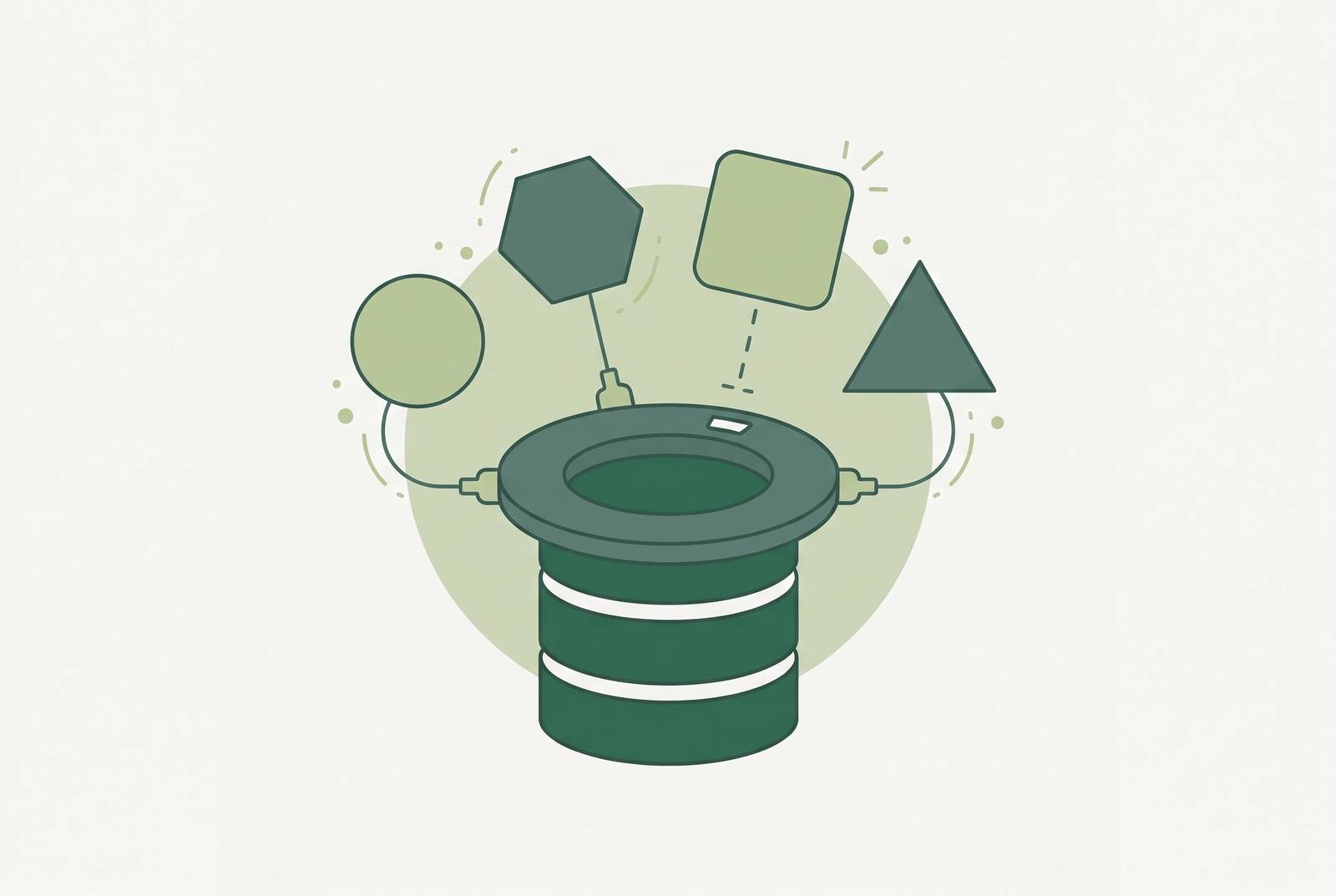
Agentic workflow automation for enterprise works best when what the company knows stays separate from the AI models that do the work. That is how a business can use several models without rebuilding its data, losing its decision history, or rewriting its workflows. The same separation lets it route tasks by cost and capability while keeping approvals and financial evidence under its own control.
Why enterprises are running multiple AI models at once — and what that costs them
CFOs are getting AI bills they did not budget for. GitHub moved Copilot to token-metered AI Credit billing on June 1, 2026, so every token became a line in the budget and brought to light spending that finance leaders had not expected. Tokens are the units of input and output that models process. As agentic systems work through several steps, they use more tokens than the first request alone needs.
AICC's 2026 AI API Infrastructure Report puts the average enterprise account at 4.7 distinct models, up from 2.1 in Q1 2025. That shift reflects a move away from using the strongest model for everything toward matching capability to task complexity. The economic logic is sound, but execution is harder. Per-token prices have dropped sharply, but token use has grown faster, so getting better rates alone cannot keep spending in check.
Why adding models without an architecture plan compounds the problem
Adding a cheaper model can create another place where the business has to explain itself. Without a shared knowledge layer, each model needs its own company context, and there is no shared record of the decisions it helps make. Departments can then feed different versions of the business into separate tools. The fragmentation starts before anyone changes vendors. Individual access keys also make spending harder to track and data rules harder to enforce.
Dependence on one model creates a different set of risks. A provider can change its pricing or retire a model, while data residency requirements can force a migration. A better model may appear that the existing applications cannot easily adopt. Regulatory exposure can also leave the business needing a fallback. Each of these risks affects both buying and running models because it can force changes to applications and compliance controls built around one provider.
In June 2026, an export-control directive took a major frontier model offline for weeks. Organizations built entirely around it scrambled, while those with multi-provider fallbacks barely noticed. Yet having a second provider is not enough if switching means reconstructing business definitions, approval rules, and past decisions. If company knowledge lives inside model-specific setups, every addition or replacement risks another round of rebuilding.
The architectural decision that makes model-swapping possible — separating company knowledge from the model layer
The company's accumulated context is usually more valuable than the model processing it. That context includes business definitions, links between records, approved workflows, and the history of recommendations and outcomes. It explains what “a customer” means across teams and how an invoice relates to purchasing records. It also preserves who approved an action and what happened afterward. None of that should depend on one model vendor.
A shared orchestration layer separates those responsibilities. It connects applications, data, and workflows to whichever model is appropriate, rather than building each application directly around a provider's interface. The model does the reasoning or carries out a task. The organization's layer supplies the business context and controls the work, allowing models to change or run in parallel without rebuilding the applications above them.
In that architecture, a semantic layer gives business definitions one shared home. The term sounds heavier than the job. It means defining business logic once so that every model query uses the same logical view of company information. The records do not have to move into a new central repository or be duplicated there. Instead, the shared view links the context that makes sense of records in the systems already in place.
The practical test is what happens during a swap. If replacing the underlying model requires teaching the system the business from scratch, the knowledge and model layers are still fused. In a separated architecture, decision traces, approved workflows, and past outcomes remain in the organization's deployment. “Keeping what it learned” means preserving those records and rules. It does not mean depending on a particular model to remember the company.
How routing tasks across models actually reduces costs — and by how much
AICC's report puts the median cost reduction from multi-model task routing at 71% compared with single-model deployments. The mechanism is straightforward. Classification, summarization, and data extraction go to models that cost less to use, while complex reasoning goes to frontier models. Sharing company context makes this split work because each route uses the same business definitions. The reported median provides evidence for the approach at the aggregate level.
The same split within a workflow lets a capable frontier model plan the work while cheaper models carry out the steps. Planning and execution have different demands. Paying for frontier reasoning at every routine step wastes money when cheaper models can do those tasks well enough. This pattern has shown substantial savings compared with sending all the work through a frontier model.
A cascade with fallback adds a quality condition to routing. Work starts with the cheapest appropriate model and moves to a more capable one if the response fails a quality check. Routine requests stay on the inexpensive path. The minority requiring deeper reasoning can escalate without making every request pay that price. This differs from sending all work to the cheapest model and accepting whatever comes back.
Timing and repeated context offer further savings. Anthropic's Message Batches API and OpenAI's Batch API discount non-urgent work such as overnight reports and bulk document classification. Prompt caching addresses a different expense by storing static material, including system instructions, shared documents, and tool definitions, so repeated queries cost less than fresh input. The architecture needs rules for routing and budget guardrails because using more tokens can eat up the savings from either approach.
What the orchestration layer needs to govern across models, departments, and vendors
Every model request needs to pass through a common control point. A centralized API gateway checks access, limits request rates, tracks costs, records activity, and scans prompts and responses for data loss. Without it, departments can end up with separate spending and access again, even when they share a knowledge layer. Department budgets should also distinguish between model tiers. When a budget runs out, routing to cheaper alternatives can keep work moving without leaving consumption unchecked.
Reading and changing must be separate permissions. An agent that can inspect an invoice should not automatically have permission to alter a payment record. In financial decisions, legal review, and procurement, changes require explicit human approval. The audit trail must record the model's answer, the evidence shown, the approver, and the outcome. That distinction becomes especially important when agents connect to ERP, CRM, and HR systems of record.
Model changes need controls of their own. Production workloads should use specific model versions so a provider update cannot silently alter downstream behavior. New versions belong in staging before promotion. For high-stakes work, ensemble consensus can send the same request to several models and compare their responses. When the models agree, confidence rises, and when they disagree, the decision goes to a person for review, though the extra model calls make this costly.
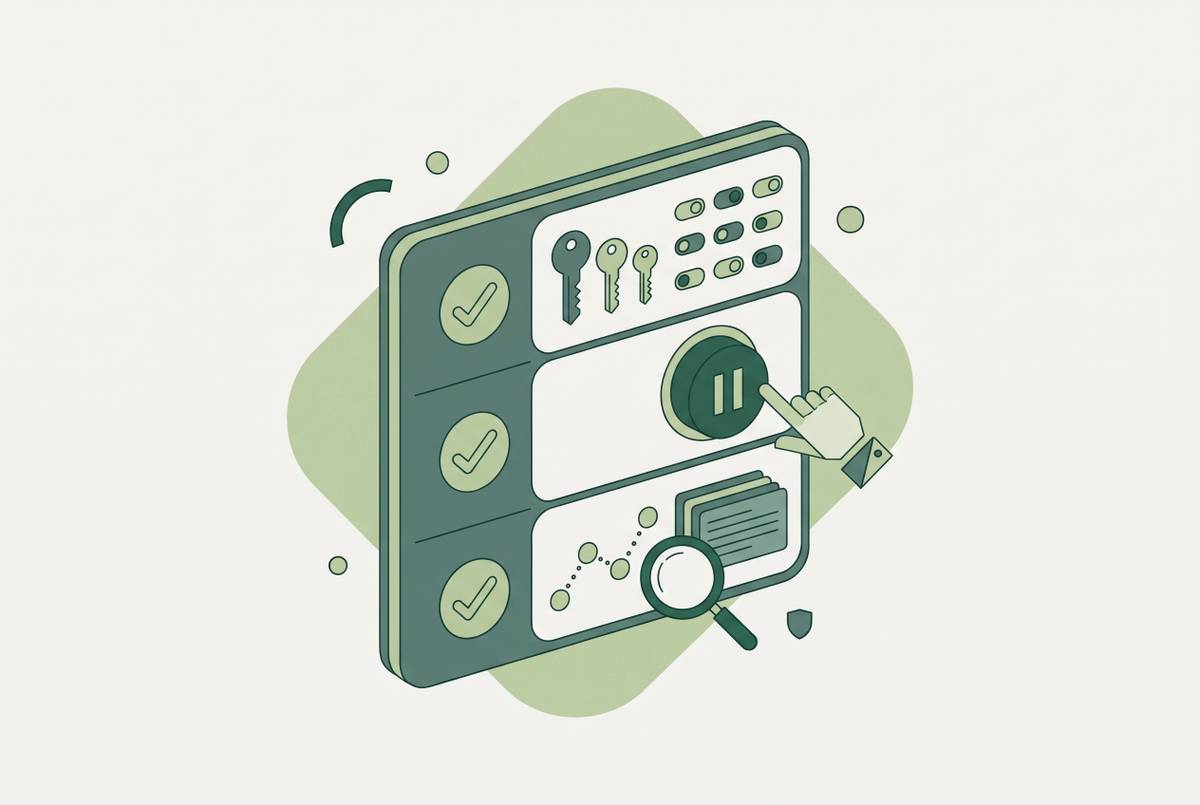
These controls have to follow the work across vendors and departments. Roles, an agent list, monitoring, audit logs, and pause or revoke controls give the organization ways to supervise agents and inspect their outputs afterward. A cheaper route must still follow the rules on permissions. Nor can a vendor swap erase the approval history that explains why an action happened.
How do AI agents work across enterprise systems — and where does the money show up?
Purchasing has the contract, finance has the invoice, and HR knows whether the person with a software seat still works there. Each team sees only part of the problem. A shared layer lets agents compare those records, identify mismatches, and route findings for approval before anything changes. Accounts payable, procurement, revenue recognition, and support all contain work that depends on this cross-system view.
The same approach can protect revenue by linking commercial commitments and finance records to identify signed work that was never billed. A warning about a renewal may depend on linking the sales team's renewal date to falling use and repeated support complaints. Neither team has the full picture alone. In procurement, cross-department visibility can also reveal purchases of the same commodity from different suppliers at different prices, creating an opportunity for volume discounts.
JPMorgan Chase's Contract Intelligence system, known as COiN, parses commercial credit agreements and extracts approximately 150 critical data attributes per document, a high-volume extraction task suited to cost-efficient models. IBM's AskHR system achieved a high containment rate and contributed to a substantial reduction in HR operating costs over four years. Walmart deployed an AI agent to negotiate with smaller suppliers, reaching agreements with most suppliers it engaged and securing cost savings and extended payment terms. These examples show different ways to use workflows, though they do not prove that all three used the same multi-model architecture.
Nodes offers one example of the separation through Nodes Connector, which links existing systems, Nodes Engine, which connects company context, compares options, and carries out approved work, and Nodes AI FDE, which does the work, while company knowledge and decision history stay in the customer's deployment as open- or closed-source models change.
Proving to the CFO and board that the architecture is delivering, not just promising
A CFO needs evidence of financial value through a defensible comparison with what happened before, while user counts measure adoption. Fragmented tools make that comparison difficult because no shared record explains which intervention produced which outcome. Model flexibility does not excuse that gap. The architecture must preserve enough evidence for finance to validate results against the organization's own records.
The measurement discipline starts before work begins. The business should agree on the baseline, measure, owner, and time period, with the goal, fee, and savings calculation recorded in writing. The costs of putting the system to work must stay separate from gross savings and include AI use, human review, fixes, and monitoring. Estimates are not confirmed results. Time saved is also not automatically cash saved, so the financial case must distinguish between the two.
Decision traces provide the evidence behind that calculation. They should retain the information shown, the reasoning, the approval, the action, and the result. Finance can then check findings against its records before approved changes proceed. IBM CEO Arvind Krishna's prepared earnings-call remarks in later quarters publicly reported run-rate savings, illustrating how sustained deployment can be discussed in financial terms. That is a different standard from a modeled estimate of potential value.
When approvals and outcomes live in the organization's layer, finance can review the same history after a vendor change or version upgrade. The business does not have to choose between adopting a better model and preserving its evidence. Separating company knowledge from the model is therefore both a flexibility decision and an accountability decision.
Publication note. This piece was commissioned by Nodes and produced with AI assistance.