Continuous Audit Readiness for AI Workflows: What You Need to Know
A practical guide to logging AI decisions as they happen.
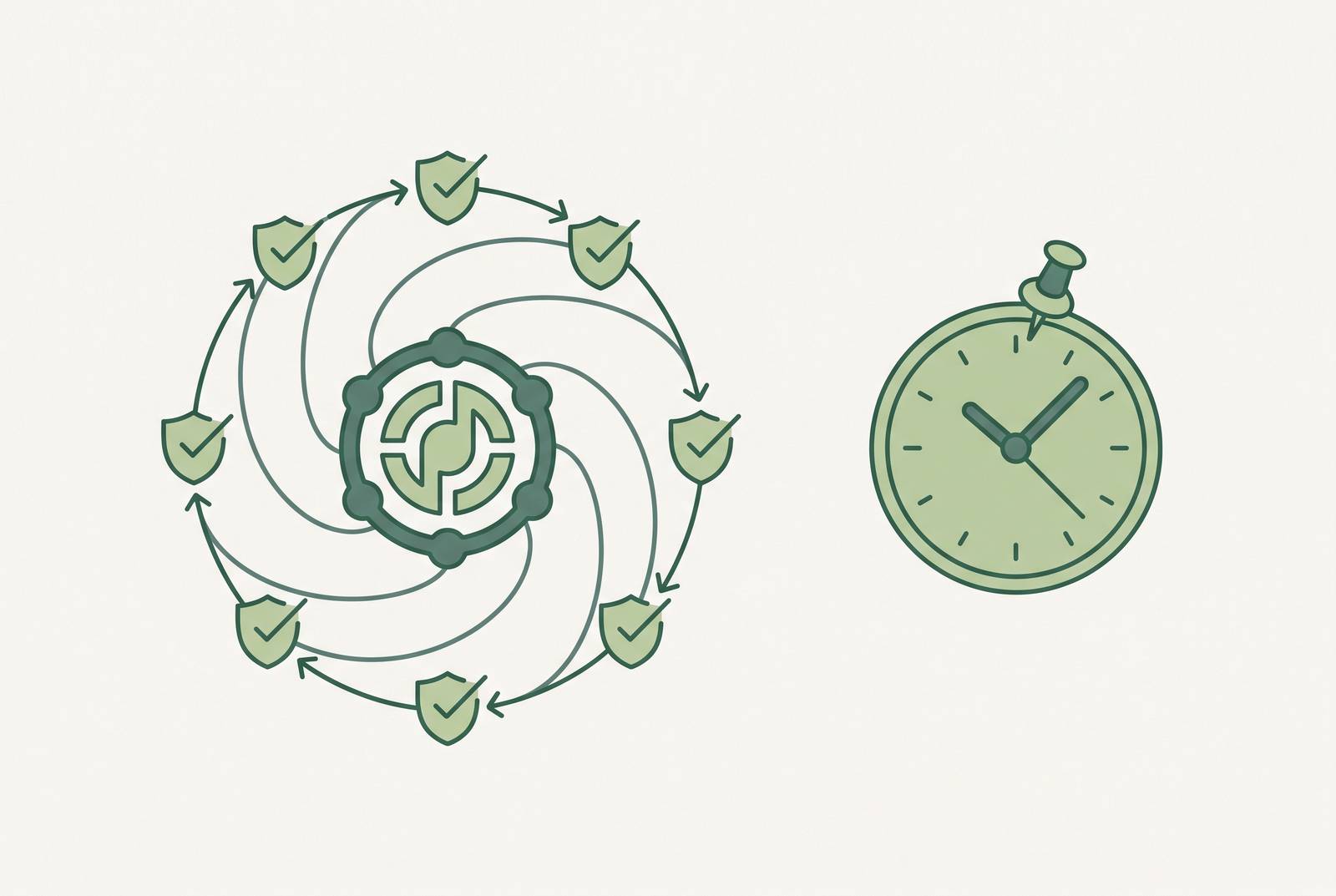
AI workflows need a running record of every decision as it happens. If you wait until an audit to pull that record together, it will be too late. The evidence you need may no longer exist.
Why checking your AI workflows once a year does not work
Traditional audits take a snapshot once a year or once a quarter. But an AI workflow can change quietly at any time. A new model version, a new data source, or a new tool can be added. None of those changes has to show up in your software inventory. So your records can look fine while the actual workflow has already moved on.
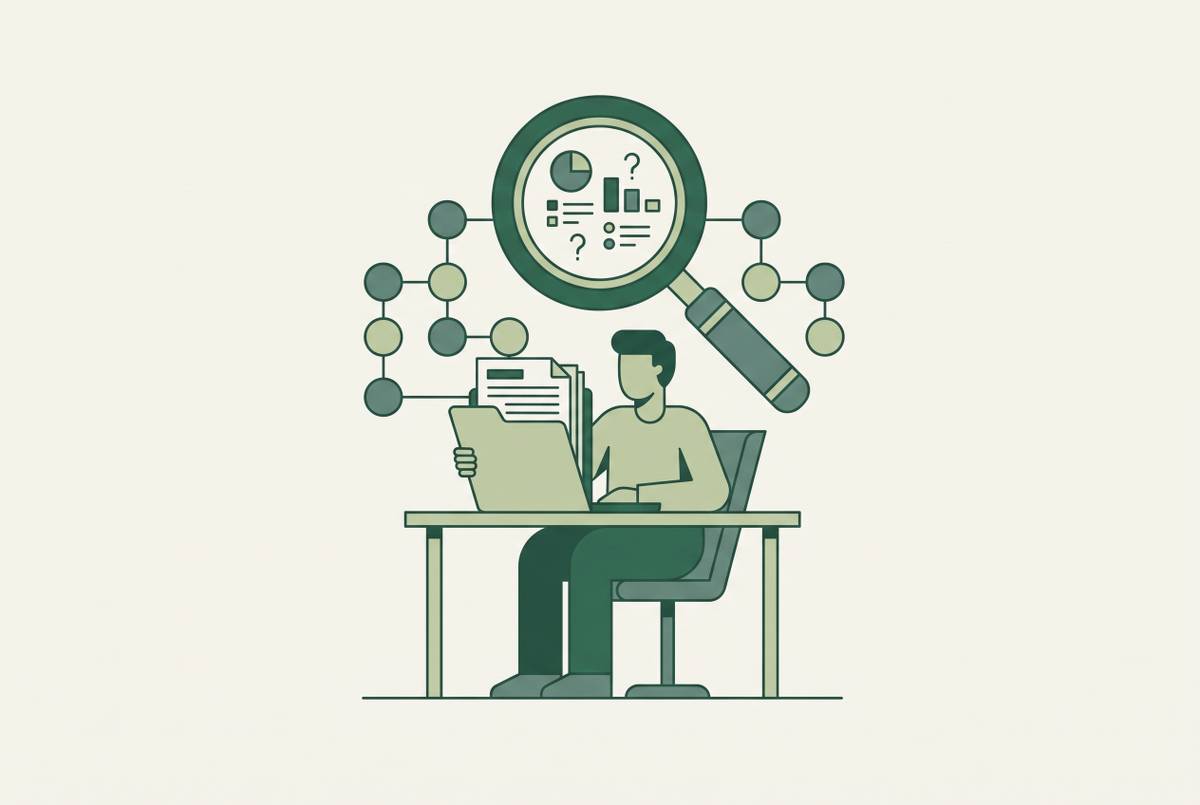
That gap is a serious problem. An AI agent can act across many systems before a human reviewer even sees step one. Policies and inventories can tell you what was permitted in theory. They cannot tell you what actually happened in a specific run. Periodic reviews still matter for examining evidence. But they cannot create evidence that was never captured in the first place.
What regulators now require you to prove
The EU AI Act (Europe's law governing how AI can be used) requires organizations to meet new obligations starting August 2026. That date is separate from the deadline for EU member states to set up regulatory test environments. The Digital Omnibus on AI extended that deadline from 2 August 2026 to 2 August 2027. On the audit side, the IAASB (the body that sets international auditing standards) has started issuing guidance on AI oversight. The PCAOB (the US board that oversees public company audits) has opened a research project but has not yet issued AI-specific rules.
In practice, an assessor needs records at the level of individual decisions. That means what data was used, how the system reasoned, who approved what, and which version of the model was running. There are two levels of readiness. Internal readiness means your own risk and audit teams can check whether your AI behaves the way you say it does. External readiness means an outside assessor can open your evidence pack and confirm it meets a published legal requirement. An unwritten or unversioned claim is not a usable record for either purpose. Nodes is a workflow platform. It connects evidence, reasoning, approvals, actions, and outcomes at the moment a decision is made. It shows what a reconstructable record looks like in practice.
How AI workflows change quietly and why that breaks any after-the-fact reconstruction
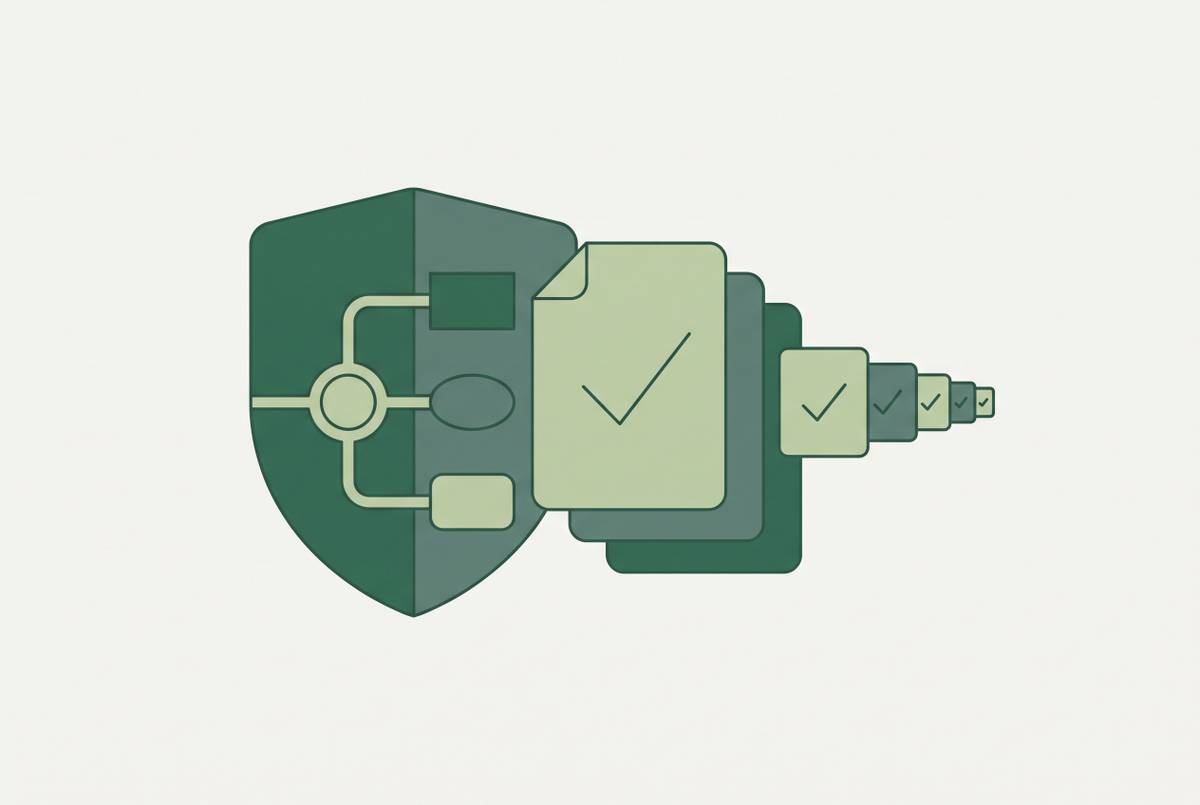
A solid record connects three things captured at the moment of decision. First, the output. Second, the active environment—the model version, the instructions given to the model, and the data snapshot used. Third, the oversight controls—who reviewed the decision, what approval process applied, and whether a human could override it. An output without those links shows a result. It does not prove the conditions that produced it.
Standard output logs do not capture that environment by default. Change management records tell you when a deployment happened. But they do not always tell you which version handled a specific decision at a specific moment—especially after a quiet provider update. When an AI agent passes work to another agent or an external tool, the record of who was permitted to do what can break at every hand-off. Nodes logs model versions, agent inventory, and decision-time context alongside outputs. It links the history of changes to the record of each decision. Whether you build this into a platform or into the workflow itself, those links must connect the input, the model and version used, the explanation, the decision, and the outcome. Separate logs assembled after the fact cannot prove a connection they never captured.
What you actually need to build for continuous audit readiness
Readiness starts before the first decision runs in production. Pick one regulated, high-volume workflow. Define what the AI is allowed to do, who is accountable for the business result, and what measurable improvement you expect. Then make evidence capture part of how the workflow runs. A dashboard may display the resulting record, but it does not create it.
Data readiness also has to be in place before you start. That means classifying how sensitive each piece of data is. It means confirming you have the right to use it for the intended purpose. It also means identifying personal, customer, employee, and proprietary information. The read access needed to reconstruct a decision must stay available. Permission to change records must be separately and clearly approved.
The operating structure needs data flowing in from your business systems. It needs analysis that spots patterns and problems in real time. It also needs a workflow layer that routes exceptions and escalations. Every point where a human makes a decision must keep a record of that decision. Together, these steps turn evidence collection from a manual cleanup job into something built into the running workflow.
What a traceable AI workflow looks like in practice
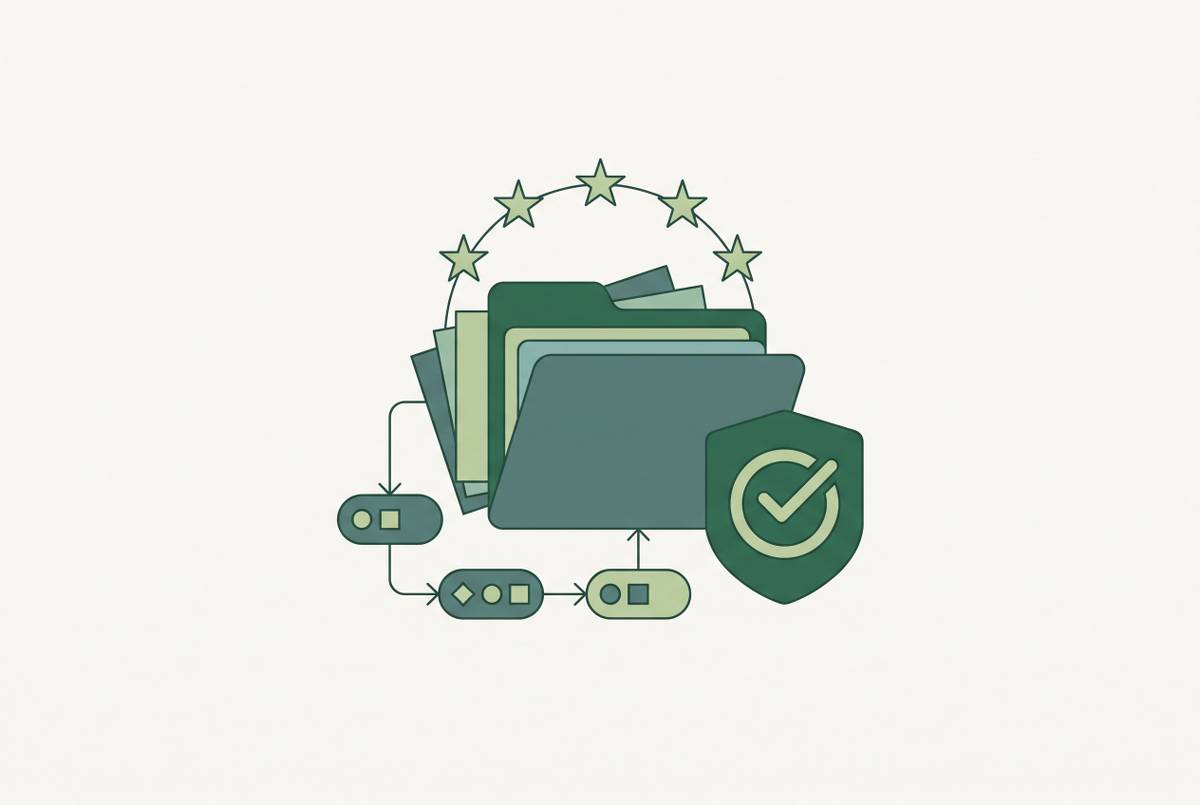
A workflow you can reconstruct later needs eight types of records. The first is a model card—a document recording the model's name, version, and provider, what it is meant to do, and its known limitations. Linked to the decision-time record, it shows which model produced an output and where a version boundary falls.
Data lineage records identify where every piece of data came from, how it was retrieved, and when. Source data documentation lists the approved documents and how often they are refreshed. The risk assessment records how the use case was classified, what the impact analysis found, what steps were taken to reduce risk, and who signed off. Evaluation and bias test results show how the workflow was tested before use.
Human-approval records carry a particular requirement. For a significant action—such as changing payment information or making a binding customer decision—the record must identify the reviewer, the limits of that reviewer's authority, and the decision they made. The explanation must be readable by a non-technical reviewer.
The last two record types are the change log for models and instructions given to the model, and the incident and exception log. When a human corrects a recommendation or allows an exception, the reason belongs in the decision record. Keeping it in a separate system breaks the record at the exact point where human judgment mattered most.
Building governance into the workflow rather than adding it on top
An approval record can only exist if the workflow contains an approval gate—a point where a human must decide before the workflow continues. Before deployment, you need named owners for decisions, exceptions, and risk. The business owner is accountable for the outcome and user workflow. The technical owner handles architecture and connections to other systems. The security or risk owner handles access and data exposure. The legal or compliance owner identifies the obligations that apply. The model or vendor owner tracks terms, changes in what the model can do, and dependencies on providers. These roles establish who has authority before an incident tests that question.
That authority must also limit what the system can do. When an AI agent passes work to another agent or tool, the permissions for that sub-task should stay the same or narrow—not expand just because another component joins. High-impact actions require a human to pause and approve before the action runs. In Nodes, permissions and approval policies govern the work from inside the execution layer. This shows how controls can sit inside a workflow rather than alongside it.
The same structure must draw a clear line between approved systems and AI tools that employees use without formal approval. Otherwise the audit record covers only part of what actually happened. An AI governance board gives that boundary real force when it has authority to approve, pause, or reject deployments across product, legal, security, risk, and data teams. An advisory group without veto power cannot replace a gate that can actually stop a deployment.
Why gaps in agent monitoring are the most common weak point right now
A monitoring program may capture what an agent answered. But it may not preserve the permissions or approval decisions behind the actions that produced the answer. That is the real test of governance built into execution. When something goes wrong, you need to reconstruct the sequence.
Incident response also needs a procedure you can actually run—not just one written down. That procedure must cover revoking the agent's credentials, isolating it from the tool ecosystem, reconstructing its actions, and meeting any notification requirements. A written procedure cannot stop an agent if the actual control does not exist. Without the ability to contain the problem, you also cannot limit the cost of errors spreading across systems.
As a concrete example, Nodes agents operate under pause and revoke controls. These allow a single agent to be paused without stopping the entire deployment. The audit log captures the state at the moment of pause. The key difference is between watching an agent and controlling it. Monitoring gives you visibility. Stop controls make intervention possible and preserve the exact point at which authority changed.
How early model and data decisions shape what your audit record can prove later
The model and data choices you make at the start determine what your evidence chain can prove later. Sensitivity classifications—public, internal, confidential, regulated—set the handling rules for each workflow. Confirming the right to use data tells you whether the intended AI purpose is permitted. If certain information must never reach an external model provider, that boundary has to exist before you go live. A later record can show that data went somewhere it was not permitted to go, but it cannot undo that flow.
The environment you deploy in also shapes the evidence about where data lives, who can access it, and how model versions are tracked. Choosing a private cloud environment, on-premises infrastructure, or a public cloud commits you to how you will support audits as well as which infrastructure you will use. Organizations with data sovereignty requirements—rules about where data must be stored—must make that choice before production. Retention rules for instructions, outputs, logs, and stored data snapshots cannot recover material that was never kept.
Continuity matters when the technology changes. Nodes runs in the customer's own cloud, on its own servers, or in Nodes Cloud. It keeps the customer's data and what it learns even when the customer changes AI models. So its governance structure does not break when you switch providers. Customers keep their connected map of company records, decision records, and outcome history. That separation shows a general requirement: when the model changes, you should keep the evidence you need to explain earlier decisions.
Measuring AI workflows against an agreed baseline rather than counting how much it is used
Evidence that a workflow ran is not evidence that it worked. Users, instructions given to the model, and agent runs all show activity. But you need a reference point. Agree on how to measure success, who will measure it, and over what period—before deployment. Setting those measures afterward risks fitting the test to the result you already have.
The cost unit should be a successfully completed workflow, including failures, retries, reviews, and corrections. A cheaper model can cost more overall if it creates more work for people downstream. The comparison before deployment should include the cost of action, delay, and failure. It should also include implementation, connection to other systems, AI usage, review, correction, change management, and monitoring. Realistic failure scenarios need assessment for how likely they are, what they would cost, how easy they are to detect, and whether they can be undone. Controls and audit infrastructure are a real line item in the return on investment calculation.
Estimates must stay separate from observed results. Time saved must stay separate from cash savings. Otherwise, figures that are each individually correct can be combined into a misleading business claim. One example of setting a reference point early is the Nodes first findings, delivered within 72 hours of complete agreed data access. These show at least $1M in potential savings for US companies with more than 2,000 employees, or the fee back. The findings, gaps, options, cost estimates, and next steps set the baseline and measurement framework before implementation. Potential value is kept clearly separate from results that have yet to be measured.
Start with one workflow and expand as you demonstrate quality
Starting with one workflow is the right move because the first workflow sets the governance pattern everything else will inherit. Choose a bounded problem. It should have an identifiable user, an existing process, an expected improvement, and a named owner. Begin with investigation and recommendations using read-only access. Then allow the system to take action only when a person approves, as quality and value are shown.
That sequence leaves room to fix problems before they force you to abandon the initiative. Data privacy concerns, security risks, cost overruns, and data readiness problems can all stop an AI project before it reaches production. For high-risk decisions, keeping a human in the review step may cost more per run. But it can still be the better choice overall when a wrong automated action would cost far more. The ability to reverse a decision is part of the design.
Nodes finds the money a company loses between its systems and fixes the problem when a person says yes. It starts read-only so that nothing happens without a person's approval. Nodes Connector connects systems, builds private integrations, and checks them in your environment. Nodes AI FDE clarifies the goal, sets up workflows, and tests them before production. Once the first workflow has a working evidence chain and agreed measures, its governance patterns can carry over to the next. The connected map of company records, decision records, and outcome history becomes accumulated context rather than isolated audit files. Continuous readiness gets easier as that evidence base grows, because each new workflow can build on decisions you can already explain.